There are Heroes – and then there are Greek Heroes.
Few mere mortals have ever embarked on such bold and heart-stirring adventures, overcome myriad monstrous perils, or outwitted scheming vengeful gods, quite as stylishly and triumphantly as Greek heroes.
In this companion to his bestselling Mythos, Stephen Fry brilliantly retells these dramatic, funny, tragic and timeless tales. Join Jason aboard the Argo as he quests for the Golden Fleece. See Atalanta – who was raised by bears – outrun any man before being tricked with golden apples. Witness wily Oedipus solve the riddle of the Sphinx and discover how Bellerophon captures the winged horse Pegasus to help him slay the monster Chimera.
Filled with white-knuckle chases and battles, impossible puzzles and riddles, acts of base cowardice and real bravery, not to mention murders and selfless sacrifices, Heroes is the story of what we mortals are truly capable of – at our worst and our very best.
Heroes is book 2 of Stephen Fry’s 4 book instalment of the Greek Myth retellings. Heroes, unsurprisingly, focuses on the heroes of Greek Mythology; Jason, Theseus, Oedipus, Bellerophon etc.
This is my least favourite of the 4.
Now, that is not because I did not find it interesting. Every story is interesting, and I like them all individually. However, [stop reading if you do not want anything remotely spoiled] I can’t get past that everything that happened to these supposed ‘heroes’, only happened because the Gods willed it. I know all these stories are fictional in the first place, but it was like children playing with their dolls.
Apart from that, I again, was surprised by how often these stories are referenced in contemporary media and literature. I also feel a whole lot smarter, because now, I actually understand them.
Fry’s writing was clear, interesting and easy to read. I am amazed by his ability to translate so much information into a 400-page book. His comedic take on conversations made the stories all the more enjoyable.
Like Mythos, I would recommend to beginners, but it could be too broad for someone more knowledgeable on the area.
Click link below for Storygraph overview, which includes general rating, summary (same as above) and other reviews.
“What is it you think you’re protecting in that brain of yours? The war is over. Holdfast is dead. The Eternal Flame extinguished. There’s no one left for you to save.”
Once a promising alchemist, Helena Marino is now a prisoner—of war and of her own mind. Her Resistance friends and allies have been brutally murdered, her abilities suppressed, and the world she knew destroyed.
In the aftermath of a long war, Paladia’s new ruling class of corrupt guild families and depraved necromancers, whose vile undead creatures helped bring about their victory, holds Helena captive.
According to Resistance records, she was a healer of little importance within their ranks. But Helena has inexplicable memory loss of the months leading up to her capture, making her enemies wonder: Is she truly as insignificant as she appears, or are her lost memories hiding some vital piece of the Resistance’s final gambit?
To uncover the memories buried deep within her mind, Helena is sent to the High Reeve, one of the most powerful and ruthless necromancers in this new world. Trapped on his crumbling estate, Helena’s fight—to protect her lost history and to preserve the last remaining shreds of her former self—is just beginning. For her prison and captor have secrets of their own . . . secrets Helena must unearth, whatever the cost.
⭐⭐
Rating: 2 out of 5.
REVIEW
THEMES: FANTASY, EMOTIONAL, TENSE, DARK ACADEMIA, SLOW-PACED.
Helena Marino is a prisoner being held by the enemy she once fought against. She is imprisoned in the residence of the High Reeve who is notorious for his murderous rampages. Even though her records show she is nothing more than a healer, she possesses something they want. The issue is, it is hidden within her mind and neither they nor Helena can access it. Helena must dig deep to reveal what is being hidden within her, though that raises the question… is it hidden for a reason? And will uncovering it save or doom her?
TW: Sexual assault, gore, torture, intense violence and much more.
Does this book need to be this long?
No. It really and truly does not. This could have been 500 pages.
The plot of the story is strong; the settings are described in detail, and I could clearly picture every place described. There is no misconception that SenLinYu is a talented writer. There were multiple points where I was looking forward to coming back to the story.
Whilst I did enjoy aspects of the book, the characters fell entirely flat. Helena is a martyr and I cannot understand why she did the things she did. The characters SenLinYu were trying to push as ‘good’ never actually did anything to prove this narrative. There is also an inappropriate dynamic and I am displeased with how it unfolds.
I will go into more detail on my spoiler review; I have very strong feelings so brace for a rant.
In saying all this, I am not a big fan of ‘dark academia/fantasy’, so that definitely contributes to my rating.
From a fantasy reader (or just a reader), I would give this one a miss.
Click link below for Storygraph overview, which includes general rating, summary (same as above) and other reviews.
“What is it you think you’re protecting in that brain of yours? The war is over. Holdfast is dead. The Eternal Flame extinguished. There’s no one left for you to save.”
Once a promising alchemist, Helena Marino is now a prisoner—of war and of her own mind. Her Resistance friends and allies have been brutally murdered, her abilities suppressed, and the world she knew destroyed.
In the aftermath of a long war, Paladia’s new ruling class of corrupt guild families and depraved necromancers, whose vile undead creatures helped bring about their victory, holds Helena captive.
According to Resistance records, she was a healer of little importance within their ranks. But Helena has inexplicable memory loss of the months leading up to her capture, making her enemies wonder: Is she truly as insignificant as she appears, or are her lost memories hiding some vital piece of the Resistance’s final gambit?
To uncover the memories buried deep within her mind, Helena is sent to the High Reeve, one of the most powerful and ruthless necromancers in this new world. Trapped on his crumbling estate, Helena’s fight—to protect her lost history and to preserve the last remaining shreds of her former self—is just beginning. For her prison and captor have secrets of their own . . . secrets Helena must unearth, whatever the cost.
⭐⭐
Rating: 2 out of 5.
REVIEW
THEMES: FANTASY, EMOTIONAL, TENSE, DARK ACADEMIA, SLOW-PACED.
Helena Marino is a prisoner being held by the enemy she once fought against. She is imprisoned in the residence of the High Reeve who is notorious for his murderous rampages. Even though her records show she is nothing more than a healer, she possesses something they want. The issue is, it is hidden within her mind and neither they nor Helena can access it. Helena must dig deep to reveal what is being hidden within her, though that raises the question… is it hidden for a reason? And will uncovering it save or doom her?
TW: Sexual assault, gore, torture, intense violence and much more.
Does this book need to be this long?
No. It really and truly does not. This could have been 500 pages.
The plot of the story is strong; the settings are described in detail, and I could clearly picture every place described. There is no misconception that SenLinYu is a talented writer. There were multiple points where I was looking forward to coming back to the story.
Whilst I did enjoy aspects of the book, the characters fell entirely flat.
Rant incoming.
I remember once I saw someone say that women often have to prove their greatness, whereas men do not. Helena and Luke are perfect examples. Luke is described as this incredible and selfless person, yet I never really see it. Helena sacrifices herself to the point of becoming a martyr, just for a measly pat on the back. Luke is simply decent – which is rather easy when you are from a privileged family!
You are kind of beaten over the head with how selfless Helena is. It gets to a point where she is just naive. I could never relate to someone who will ruin themselves for people who could care less, so maybe that is why I dislike her.
There are other bland and unrelatable characters throughout the book, but these are things I can get past.
What I can’t get past is normalising abuse. Just because this book is set in a time of war, where everything is dark and dreadful does not mean you can minimise what Kaine does to Helena. Kaine literally beats Helena senseless, violates her and humiliates her for about 500 pages. These instances are ‘mitigated’ by the fact that Helena is persevering because she is secretly trying to gain his trust. Although, conveniently when the time comes to use this secret ammunition, she has grown too fond of him. Shocker. All of this is simply because he cried about his dead mum and got hurt by his own alliance. Apparently, this wipes away all his horrendous abuse. The kicker is that he justifies it by saying he was doing it all to deter her… as if it was for her own good. After this point, he is romanticized – or their relationship is.
This continues to spread the message; ‘Ladies, if he is horrible to you just try a little harder because at some point, he may reward you with affection!’ And its harmful.
What gets me the most, is in the end, he is made out to be this misunderstood and valiant person. He literally murdered hundreds of innocent people to find a woman who he treats as more of a possession than anything else. I felt violated reading as Helena slowly and reluctantly gave into his advances.
I also just found out that this is a Hermione-Draco fanfiction come to life. I am officially turned off.
Sidenote: Crowther reminded me of Little Finger from GOT.
I will end this rant, even though I have more to say, but I don’t want to come off as a complete buzzkill.
In saying all this, I am not a big fan of ‘dark academia/fantasy’, so that definitely contributes to my rating.
From a fantasy reader (or just a reader), I would give this one a miss.
Click link below for Storygraph overview, which includes general rating, summary (same as above) and other reviews.
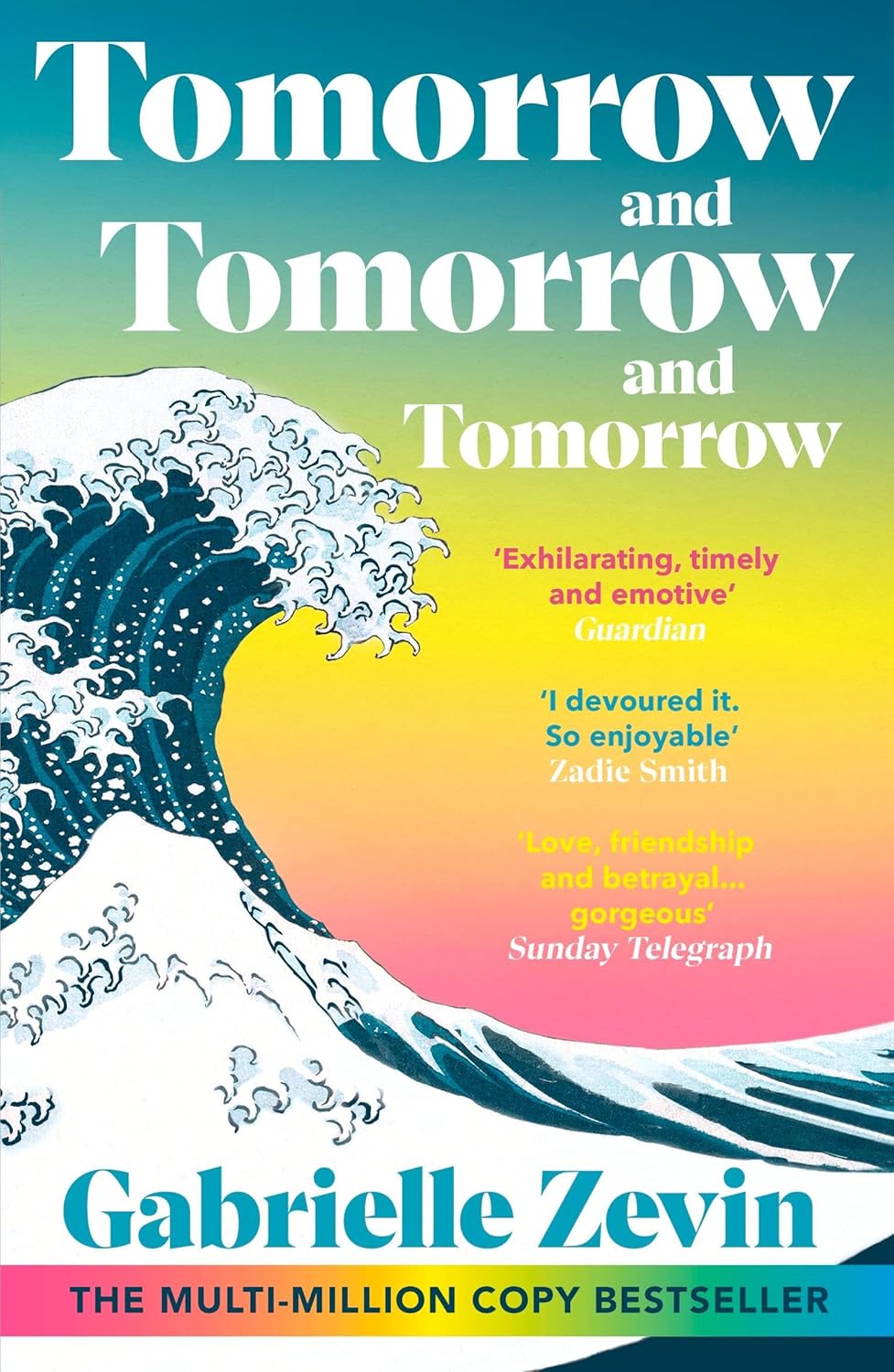
On a bitter-cold day, in the December of his junior year at Harvard, Sam Masur exits a subway car and sees, amid the hordes of people waiting on the platform, Sadie Green. He calls her name. For a moment, she pretends she hasn’t heard him, but then, she turns, and a game begins: a legendary collaboration that will launch them to stardom. They borrow money, beg favors, and, before even graduating college, they have created their first blockbuster, Ichigo: a game where players can escape the confines of a body and the betrayals of a heart, and where death means nothing more than a chance to restart and play again. This is the story of the perfect worlds Sam and Sadie build, the imperfect world they live in, and of everything that comes after success: Money. Fame. Duplicity. Tragedy.
Spanning thirty years, from Cambridge, Massachusetts, to Venice Beach, California, and lands in between and far beyond, Gabrielle Zevin’s Tomorrow, and Tomorrow, and Tomorrow is a dazzling and intricately imagined novel that examines the multifarious nature of identity, games as artform, technology and the human experience, disability, failure, the redemptive possibilities in play, and above all, our need to connect: to be loved and to love. Yes, it is a love story, but it is not one you have read before.
Sadie Green and Sam Masur love each other. They have a strong connection, which stems from their shared love of video games. They have been friends since childhood, after meeting at a hospital, under unfortunate circumstances. Despite their friendship resulting in a lifechanging venture, they must also brave heartbreak and betrayal. The question is, can they?
That was not what I was expecting.
The portrayal of friendship, especially Sadie and Sam’s, reminds me of Demon Copperhead. What I mean, is that it is so raw and real and doesn’t shy away from ugliness. Among many other things, I think the mark of a good book is when you hate the characters… some of the time. Obviously, I need balance, otherwise, If I detest a character I get into the habit of mumbling angrily and it’s not a good look.
I am impressed with how much story Gabrielle Zevin is able to fit into 400 pages. I have recently read a 1000-page book, and the characters don’t have half the depth of these ones (don’t even get me started). I am actually surprised that it is 400 pages, because it felt like so much more.
A fair warning, there are intense themes in this book, including; suicide, gore, sexual assault and, honestly, a consistent bleakness. That’s not to say there is no happiness in the book, but from my perspective, Zevin aims to perpetuate authentic relationships and events. So, it is not sugar coated or glossed over.
My only issue with the book is Sadie’s character. I feel there was a lot of lost potential, and her character solely revolves around her experiences with men. I have gone into more detail in my spoiler review.
If you like realistic books, like Demon Copperhead, I would give this one a go.
Click link below for Storygraph overview, which includes general rating, summary (same as above) and other reviews.
On a bitter-cold day, in the December of his junior year at Harvard, Sam Masur exits a subway car and sees, amid the hordes of people waiting on the platform, Sadie Green. He calls her name. For a moment, she pretends she hasn’t heard him, but then, she turns, and a game begins: a legendary collaboration that will launch them to stardom. They borrow money, beg favors, and, before even graduating college, they have created their first blockbuster, Ichigo: a game where players can escape the confines of a body and the betrayals of a heart, and where death means nothing more than a chance to restart and play again. This is the story of the perfect worlds Sam and Sadie build, the imperfect world they live in, and of everything that comes after success: Money. Fame. Duplicity. Tragedy.
Spanning thirty years, from Cambridge, Massachusetts, to Venice Beach, California, and lands in between and far beyond, Gabrielle Zevin’s Tomorrow, and Tomorrow, and Tomorrow is a dazzling and intricately imagined novel that examines the multifarious nature of identity, games as artform, technology and the human experience, disability, failure, the redemptive possibilities in play, and above all, our need to connect: to be loved and to love. Yes, it is a love story, but it is not one you have read before.
Sadie Green and Sam Masur love each other. They have a strong connection, which stems from their shared love of video games. They have been friends since childhood, after meeting at a hospital, under unfortunate circumstances. Despite their friendship resulting in a lifechanging venture, they must also brave heartbreak and betrayal. The question is, can they?
That was not what I was expecting.
The portrayal of friendship, especially Sadie and Sam’s, reminds me of Demon Copperhead. What I mean, is that it is so raw and real and doesn’t shy away from ugliness. Among many other things, I think the mark of a good book is when you hate the characters… some of the time. Obviously, I need balance, otherwise, If I detest a character I get into the habit of mumbling angrily and it’s not a good look.
I am impressed with how much story Gabrielle Zevin is able to fit into 400 pages. I have recently read a 1000-page book, and the characters don’t have half the depth of these ones (don’t even get me started). I am actually surprised that it is 400 pages, because it felt like so much more.
A fair warning, there are intense themes in this book, including; suicide, gore, sexual assault and, honestly, a consistent bleakness. That’s not to say there is no happiness in the book, but from my perspective, Zevin aims to perpetuate authentic relationships and events. So, it is not sugar-coated or glossed over.
I feel let down by Sadie’s character. There was so much potential for her, but all she is reduced to is her experience with men. Whilst interacting with men is a fact of life, there is more to it than that. All of Sadie’s lore revolves around seeking validation from men or being betrayed by them. Why didn’t Zevin bring back her sister and explore that?
I am getting a little fed up with sexual assault/misconduct being a constant in female character building. I have mentioned this before in previous reviews. Sometimes, I am unsurprised due to the calibre of the stories, but this one had potential – hence my disappointment.
If you like realistic books, like Demon Copperhead, I would give this one a go.
Click link below for Storygraph overview, which includes general rating, summary (same as above) and other reviews.
Authors June Hayward and Athena Liu were supposed to be twin rising stars: same year at Yale, same debut year in publishing. But Athena’s a cross-genre literary darling, and June didn’t even get a paperback release. Nobody wants stories about basic white girls, June thinks.
So when June witnesses Athena’s death in a freak accident, she acts on impulse: she steals Athena’s just-finished masterpiece, an experimental novel about the unsung contributions of Chinese laborers to the British and French war efforts during World War I.
So what if June edits Athena’s novel and sends it to her agent as her own work? So what if she lets her new publisher rebrand her as Juniper Song—complete with an ambiguously ethnic author photo? Doesn’t this piece of history deserve to be told, whoever the teller? That’s what June claims, and the New York Times bestseller list seems to agree.
But June can’t get away from Athena’s shadow, and emerging evidence threatens to bring June’s (stolen) success down around her. As June races to protect her secret, she discovers exactly how far she will go to keep what she thinks she deserves.
June Hayward is nothing compared to Athena Liu. How can she flourish when she must work beside her ‘dear’ friend – the accredited and beloved author. That is until Athena dies. June Hayward, or now Juniper Song has taken it upon herself to honour Athena’s memory by stealing her manuscript and making it her own. Let’s just hope no one finds out….
I have been putting Yellowface off as it was described to me as weird. Weird is a little hard to decipher, as I find weird a good thing but there is certainly a bad ‘weird’. To me, this book falls under good weird.
Having read all of Kuang’s other novels, I was pleasantly surprised by her ability to adapt to a contemporary setting- for those who don’t know, Kuang is predominantly a Fantasy writer.
Whilst her signature sarcasm remains, this book feels more personal than the others. Her layered opinions on the publishing industry and its fickle mentality are insightful, although decidedly pessimistic.
I found the way she undermines June whilst also finding her humanity commendable. Kuang let the character speak for herself without forcing an agenda on the reader, allowing them to come to their own conclusion – which would presumably reflect their personal lens.
My only comment is that Athena could have had more substance. The way she is presented in the novel is slightly reductive, though I cannot go into depth as it would spoil.
I was captivated throughout the entire novel and look back on this book fondly- it may even be my second favourite Kuang book. June’s character reminds me a bit of the main character in My Year of Rest and Relaxation.
Click link below for Storygraph overview, which includes general rating, summary (same as above) and other reviews.
Our narrator should be happy, shouldn’t she? She’s young, thin, pretty, a recent Columbia graduate, works an easy job at a hip art gallery, lives in an apartment on the Upper East Side of Manhattan paid for, like the rest of her needs, by her inheritance. But there is a dark and vacuous hole in her heart, and it isn’t just the loss of her parents, or the way her Wall Street boyfriend treats her, or her sadomasochistic relationship with her best friend, Reva. It’s the year 2000 in a city aglitter with wealth and possibility; what could be so terribly wrong?
Even with a life of comfort, she cannot seem to be happy. She lives off her dead mother’s inheritance and has the emotional support of her best friend. But still, something is missing. All that keeps her going is the pills her unorthodox psychiatrist prescribes her. Until one day, she has an insane, but brilliant epiphany.
The protagonist in this story is nameless, hence the pronouns in the overview.
I am not a fan of books that are heavy with mania and lack clarification or character development. At first, this book seemed to follow that bleak pattern – until Moshfegh breathes life into the plot by redirecting the story completely.
The idea she comes up with is fascinating and rather satisfying. I am pleasantly surprised with how this story unfolds. Unfortunately, I cannot speak too much on what I like as it spoils it. What I will say, is it redeems the first half of the book.
I do not mind a bit of cyclical depression which forces the reader to feel the protagonist’s misery. However, it drags on – it makes its point but then continues past its expiry date. I also was not a fan of the Whoopi Goldberg obsession, it felt out-of-place and silly. I can’t help but respect randomness though.
Despite the main characters grim habits, she has a certain charm. Moshfegh paints over her dismal lifestyle with a dry humour and matter-of-fact perspective, which alleviates the bleaker elements of the book. I felt like I was able to root for the character.
This is definitely a book for those who enjoy psychological fiction. It is like Boy Parts, but with more clarity.
Click link below for Storygraph overview, which includes general rating, summary (same as above) and other reviews.
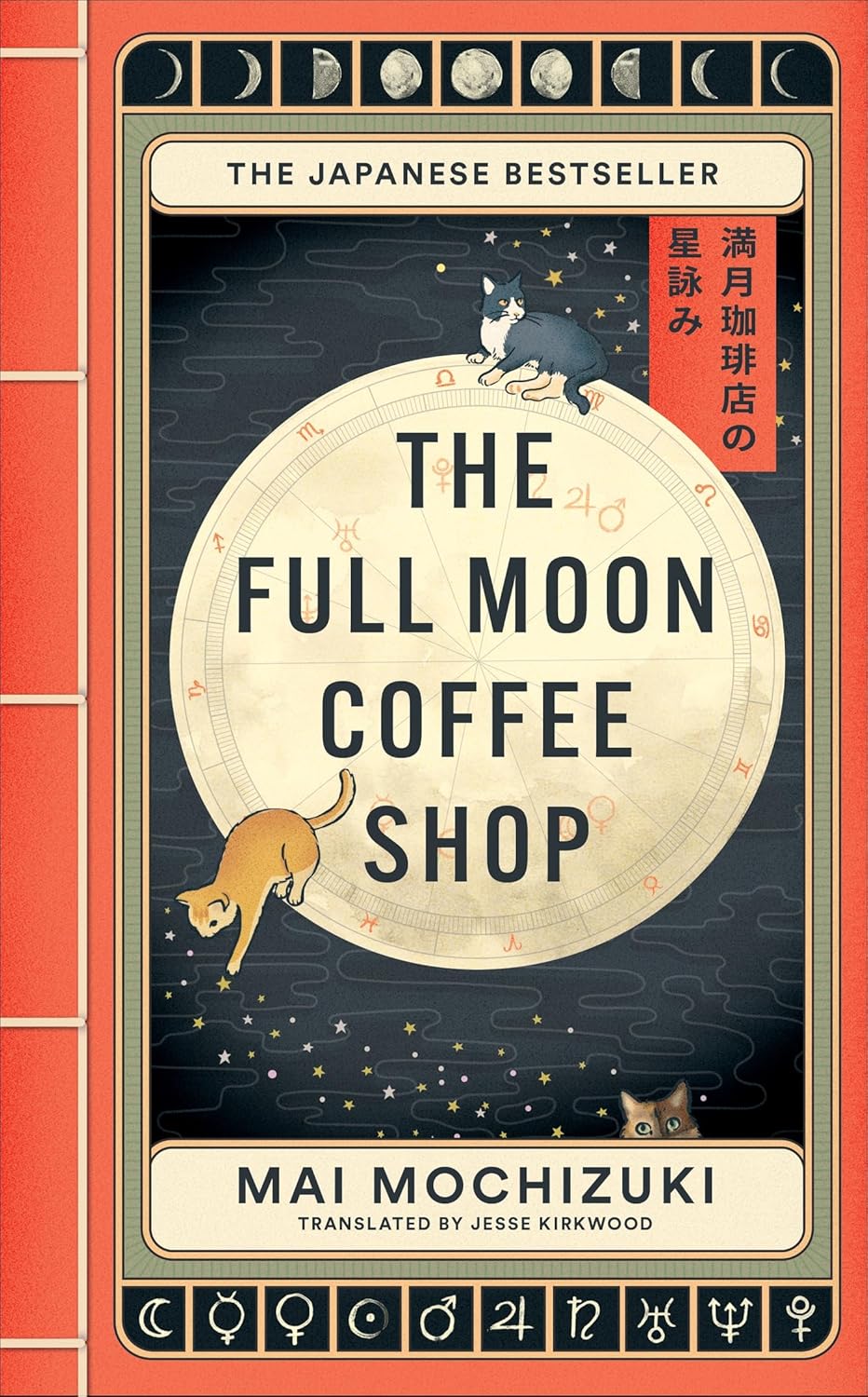
In Japan, cats are a symbol of good luck. As the myth goes, if you are kind to them, they’ll one day return the favor. And if you are kind to the right cat, you might just find yourself invited to a mysterious coffee shop under a glittering Kyoto moon.
This particular coffee shop is like no other. It has no fixed location, no fixed hours, and seemingly appears at random to adrift young people at crucial junctions in their lives.
It’s also run by talking cats.
While customers at the Full Moon Coffee Shop partake in cakes and coffees and teas, the cats also consult them on their star charts, offer cryptic wisdom, and let them know where their lives veered off course.
Every person who visits the shop has been feeling more than a little lost. For a down-on-her-luck screenwriter, a romantically stuck movie director, a hopeful hairstylist, and a technologically challenged website designer, the coffee shop’s feline guides will set them back on their fated paths. For there is a very special reason the shop appeared to each of them…
In the streets of Kyoto, there is a pop-up coffee shop that serves delicious beverages and desserts. The catch is, it only appears when someone needs it. As there is more to this eatery than just taste. When three lost souls stumble upon the cafe, they stop in for a bite to eat. Instead, they find guidance in the cafe’s servers…. who happen to be cats.
I found this book refreshing. With each storyline, Mochizuki does not go with the obvious solution. The characters are shown how to find peace in their lives, rather than focusing on the end goal.
I still remember each character, regardless of reading similar books since. This is due to the stories interlinking, which I found added to the reading experience. I was able to see each character in a different, and better light.
I am grateful to this book for getting me into the genre, but it is not my favourite. There is too much astrology talk, which at first, I tried to digest but could not in the end. It would only be interesting to someone with prior knowledge of astrology.
Super short chapters with sweet, insightful little stories. Would recommend to magical realism readers, cat lovers or astrology lovers.
Click link below for Storygraph overview, which includes general rating, summary (same as above) and other reviews.
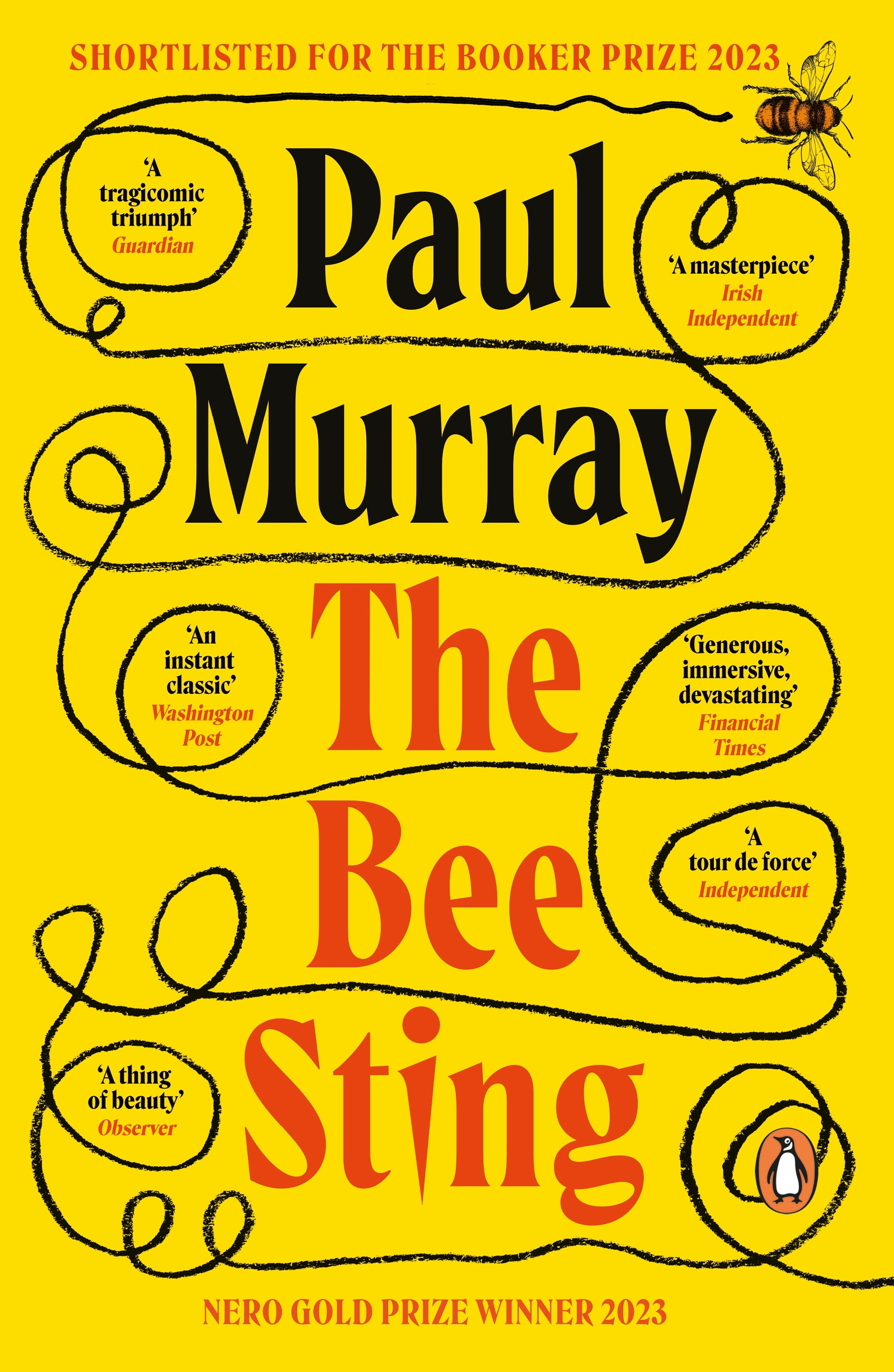
The Barnes family is in trouble. Dickie is up to his armpits in debt and increasingly preoccupied with preparing for an apocalypse that may or may not be just around the corner. His wife, Imelda, has become invisible to everyone except Big Mike, a man with unsavory local connections and a long-running feud with her husband. Their teenage daughter, Cass, always at the top of her class, has started drinking and staying out late, though nobody seems to have noticed. And twelve-year-old PJ is spending more and more time online, talking to a really funny, friendly kid called Ethan who never has his camera on and wants PJ to run away from home.
Every step carries the family closer to a precipice, a moment of reckoning. It feels inevitable. But how far back would you have to go to change the story? To the day Dickie hired a beautiful, feckless young man to help him out in the garage? To the year before Cass was born, at the wedding where Dickie took the place that should have belonged to his brother? To the night Imelda was supposed to skip town but didn’t? All the way back to ten-year-old Dickie standing in the summer garden, trembling before his father, learning how to be a proper man?
Ireland’s recession has affected many, including the Barnes family. Each member is facing the repercussions, causing a strain on the family dynamic. The question is, is this the root of the issue, or the straw that broke the camel’s back?
The Beesting provides a perspective from each member of the Barnes family. The children; Cass and PJ and the parents; Imelda and Dickie. Murray shows the importance of perspective, and how often we get it wrong. The juxtaposition between perception and true identity becomes obvious.
The characters are laid bare. Neither good nor bad, only complicated. I’ve become quite fond of them, which only intensifies the storyline.
Recently in the media, Ireland has been some-what romanticised. Through this book, Murray provides insight into the darker side of Irish history.
The family dynamic is unoriginal. I am tiring of the ‘kind’ but absent father, and ‘present’ but overbearing mother. It perpetuates such a sexist, reductive ideology that excuses men of fault.
Both the father and son have an endearing nature, which dilutes their flaws. Whereas the mother and daughter come across as cantankerous, despite justification.
Such a moving read. Would recommend if you enjoy reading about complicated families or fictional stories based on true events.
Click link below for Storygraph overview, which includes general rating, summary (same as above) and other reviews.
Offred is a Handmaid in the Republic of Gilead. She may leave the home of the Commander and his wife once a day to walk to food markets whose signs are now pictures instead of words because women are no longer allowed to read. She must lie on her back once a month and pray that the Commander makes her pregnant, because in an age of declining births, Offred and the other Handmaids are valued only if their ovaries are viable. Offred can remember the years before, when she lived and made love with her husband, Luke; when she played with and protected her daughter; when she had a job, money of her own, and access to knowledge. But all of that is gone now…
Offred has had to adjust to a life of servitude. Her value is in her ability to birth a child. She must live day to day performing the same mundane tasks – in silence – to ensure her place. She must also battle with her mind as it plays back memories of her past life, and all she has lost.
I do not have much to say for this book, in the same way as I do not have much to say about Nineteen Eighty-Four and Fahrenheit 451.
I can see the impact they would have had at the time, as well as how they are proving to be accurate. I just do not find it quite as revolutionary as it has been made out to be.
I understand the appeal of the book, as it evokes an emotional reaction. I like political, dystopian novels as they are so important – especially now. But to write on such an ambitious topic and then have these flavourless, expendable characters seems reductive. I do not think the main character said anything inspiring, not even in her head.
This, to me, is another book that has a powerful, admirable message, but an underwhelming follow through.
Apologies to the Handmaid lovers, I will say, I am happy with the impact it has made on society. I just did not enjoy the book.
Click link below for Storygraph overview, which includes general rating, summary (same as above) and other reviews.