Category: Book Reviews

  • Yellowface

    Yellowface

    Released 2023, 323 pages.

    Authors June Hayward and Athena Liu were supposed to be twin rising stars: same year at Yale, same debut year in publishing. But Athena’s a cross-genre literary darling, and June didn’t even get a paperback release. Nobody wants stories about basic white girls, June thinks.

    So when June witnesses Athena’s death in a freak accident, she acts on impulse: she steals Athena’s just-finished masterpiece, an experimental novel about the unsung contributions of Chinese laborers to the British and French war efforts during World War I.

    So what if June edits Athena’s novel and sends it to her agent as her own work? So what if she lets her new publisher rebrand her as Juniper Song—complete with an ambiguously ethnic author photo? Doesn’t this piece of history deserve to be told, whoever the teller? That’s what June claims, and the New York Times bestseller list seems to agree.

    But June can’t get away from Athena’s shadow, and emerging evidence threatens to bring June’s (stolen) success down around her. As June races to protect her secret, she discovers exactly how far she will go to keep what she thinks she deserves.

    Rating: 4.5 out of 5.

    June Hayward is nothing compared to Athena Liu. How can she flourish when she must work beside her ‘dear’ friend – the accredited and beloved author. That is until Athena dies. June Hayward, or now Juniper Song has taken it upon herself to honour Athena’s memory by stealing her manuscript and making it her own. Let’s just hope no one finds out….

    I have been putting Yellowface off as it was described to me as weird. Weird is a little hard to decipher, as I find weird a good thing but there is certainly a bad ‘weird’. To me, this book falls under good weird.

    Having read all of Kuang’s other novels, I was pleasantly surprised by her ability to adapt to a contemporary setting- for those who don’t know, Kuang is predominantly a Fantasy writer.

    Whilst her signature sarcasm remains, this book feels more personal than the others. Her layered opinions on the publishing industry and its fickle mentality are insightful, although decidedly pessimistic.

    I found the way she undermines June whilst also finding her humanity commendable. Kuang let the character speak for herself without forcing an agenda on the reader, allowing them to come to their own conclusion – which would presumably reflect their personal lens.

    My only comment is that Athena could have had more substance. The way she is presented in the novel is slightly reductive, though I cannot go into depth as it would spoil.

    I was captivated throughout the entire novel and look back on this book fondly- it may even be my second favourite Kuang book. June’s character reminds me a bit of the main character in My Year of Rest and Relaxation.

    Click link below for Storygraph overview, which includes general rating, summary (same as above) and other reviews.

    LINK TO STORYGRAPH PROFILE

  • My Year of Rest and Relaxation

    My Year of Rest and Relaxation

    Released 2018, 289 pages.

    Our narrator should be happy, shouldn’t she? She’s young, thin, pretty, a recent Columbia graduate, works an easy job at a hip art gallery, lives in an apartment on the Upper East Side of Manhattan paid for, like the rest of her needs, by her inheritance. But there is a dark and vacuous hole in her heart, and it isn’t just the loss of her parents, or the way her Wall Street boyfriend treats her, or her sadomasochistic relationship with her best friend, Reva. It’s the year 2000 in a city aglitter with wealth and possibility; what could be so terribly wrong?

    Rating: 3 out of 5.

    Even with a life of comfort, she cannot seem to be happy. She lives off her dead mother’s inheritance and has the emotional support of her best friend. But still, something is missing. All that keeps her going is the pills her unorthodox psychiatrist prescribes her. Until one day, she has an insane, but brilliant epiphany.

    The protagonist in this story is nameless, hence the pronouns in the overview.

    I am not a fan of books that are heavy with mania and lack clarification or character development. At first, this book seemed to follow that bleak pattern – until Moshfegh breathes life into the plot by redirecting the story completely.

    The idea she comes up with is fascinating and rather satisfying. I am pleasantly surprised with how this story unfolds. Unfortunately, I cannot speak too much on what I like as it spoils it. What I will say, is it redeems the first half of the book.

    I do not mind a bit of cyclical depression which forces the reader to feel the protagonist’s misery. However, it drags on – it makes its point but then continues past its expiry date. I also was not a fan of the Whoopi Goldberg obsession, it felt out-of-place and silly. I can’t help but respect randomness though.

    Despite the main characters grim habits, she has a certain charm. Moshfegh paints over her dismal lifestyle with a dry humour and matter-of-fact perspective, which alleviates the bleaker elements of the book. I felt like I was able to root for the character.

    This is definitely a book for those who enjoy psychological fiction. It is like Boy Parts, but with more clarity.

    Click link below for Storygraph overview, which includes general rating, summary (same as above) and other reviews.
    LINK TO STORYGRAPH PROFILE

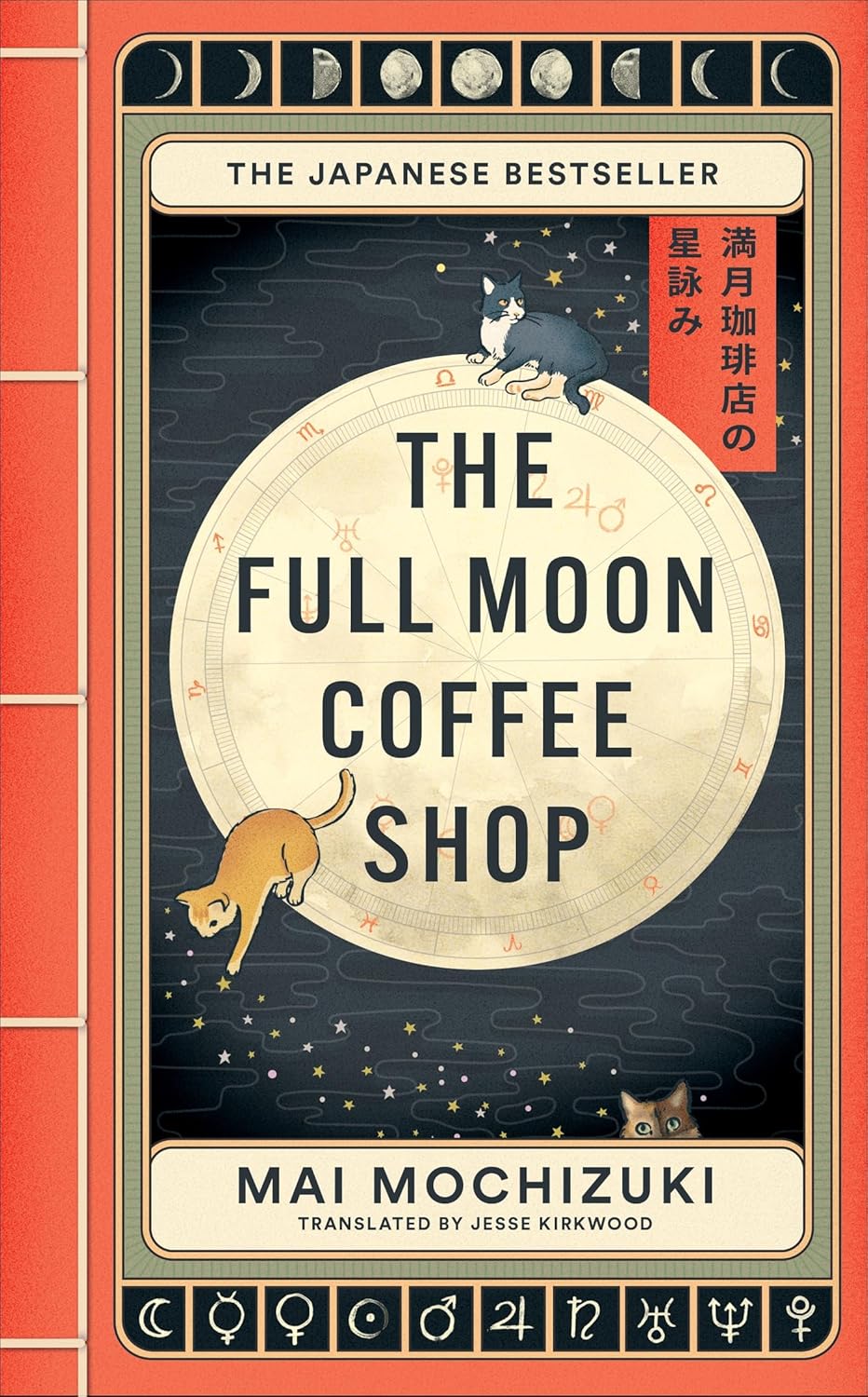
  • The Full Moon Coffee Shop

    The Full Moon Coffee Shop

    SPOILER-FREE

    Released 2020, 256 pages.

    In Japan, cats are a symbol of good luck. As the myth goes, if you are kind to them, they’ll one day return the favor. And if you are kind to the right cat, you might just find yourself invited to a mysterious coffee shop under a glittering Kyoto moon.

    This particular coffee shop is like no other. It has no fixed location, no fixed hours, and seemingly appears at random to adrift young people at crucial junctions in their lives.

    It’s also run by talking cats.

    While customers at the Full Moon Coffee Shop partake in cakes and coffees and teas, the cats also consult them on their star charts, offer cryptic wisdom, and let them know where their lives veered off course.

    Every person who visits the shop has been feeling more than a little lost. For a down-on-her-luck screenwriter, a romantically stuck movie director, a hopeful hairstylist, and a technologically challenged website designer, the coffee shop’s feline guides will set them back on their fated paths. For there is a very special reason the shop appeared to each of them… 

    Rating: 3.5 out of 5.

    In the streets of Kyoto, there is a pop-up coffee shop that serves delicious beverages and desserts. The catch is, it only appears when someone needs it. As there is more to this eatery than just taste. When three lost souls stumble upon the cafe, they stop in for a bite to eat. Instead, they find guidance in the cafe’s servers…. who happen to be cats.

    I found this book refreshing. With each storyline, Mochizuki does not go with the obvious solution. The characters are shown how to find peace in their lives, rather than focusing on the end goal.

    I still remember each character, regardless of reading similar books since. This is due to the stories interlinking, which I found added to the reading experience. I was able to see each character in a different, and better light.

    I am grateful to this book for getting me into the genre, but it is not my favourite. There is too much astrology talk, which at first, I tried to digest but could not in the end. It would only be interesting to someone with prior knowledge of astrology.

    Super short chapters with sweet, insightful little stories. Would recommend to magical realism readers, cat lovers or astrology lovers.

    Click link below for Storygraph overview, which includes general rating, summary (same as above) and other reviews.

    LINK TO STORYGRAPH PROFILE

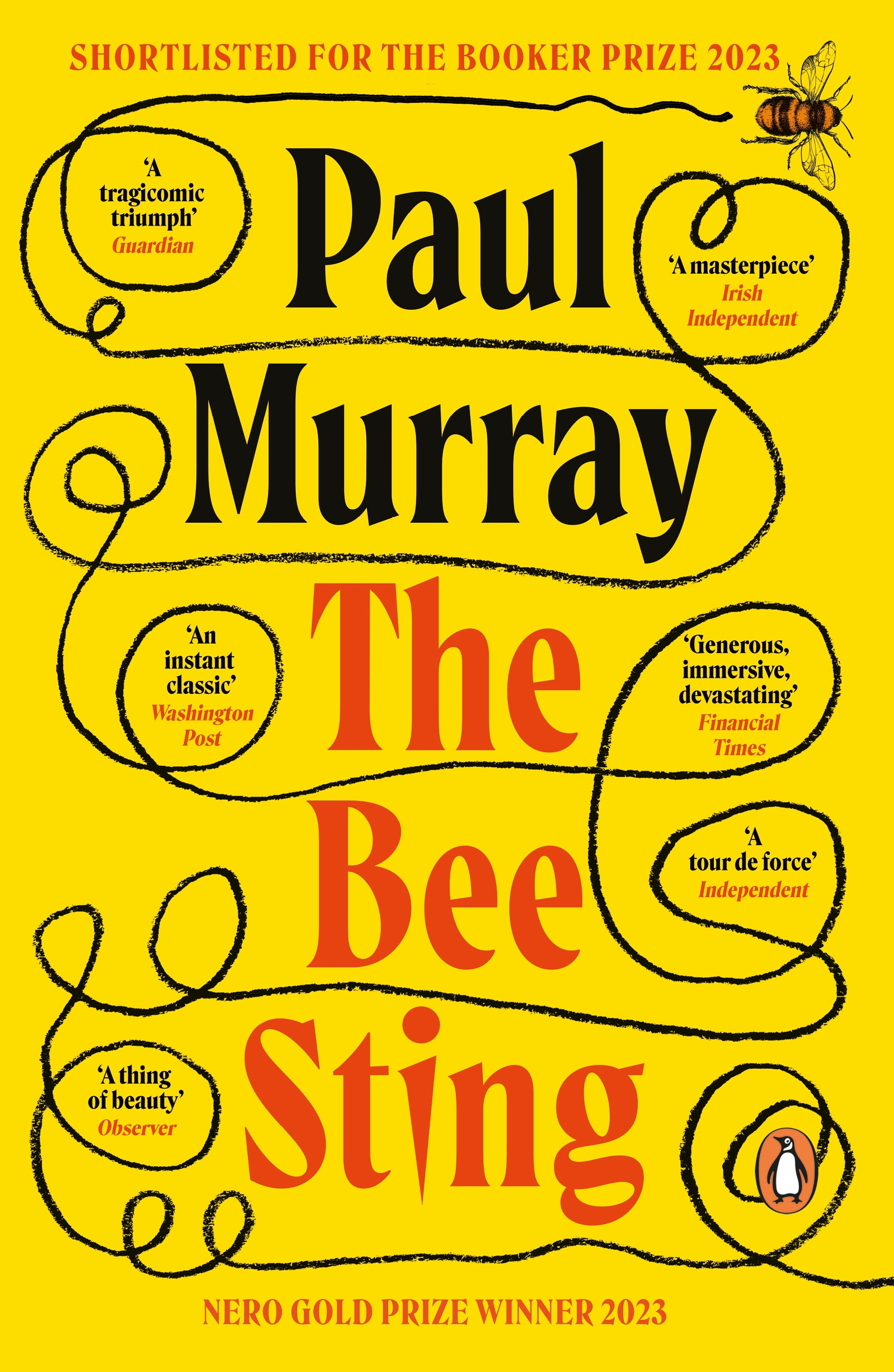
  • The Bee Sting

    The Bee Sting

    Released 2023, 645 pages.

    The Barnes family is in trouble. Dickie is up to his armpits in debt and increasingly preoccupied with preparing for an apocalypse that may or may not be just around the corner. His wife, Imelda, has become invisible to everyone except Big Mike, a man with unsavory local connections and a long-running feud with her husband. Their teenage daughter, Cass, always at the top of her class, has started drinking and staying out late, though nobody seems to have noticed. And twelve-year-old PJ is spending more and more time online, talking to a really funny, friendly kid called Ethan who never has his camera on and wants PJ to run away from home. 

    Every step carries the family closer to a precipice, a moment of reckoning. It feels inevitable. But how far back would you have to go to change the story? To the day Dickie hired a beautiful, feckless young man to help him out in the garage? To the year before Cass was born, at the wedding where Dickie took the place that should have belonged to his brother? To the night Imelda was supposed to skip town but didn’t? All the way back to ten-year-old Dickie standing in the summer garden, trembling before his father, learning how to be a proper man? 

    Rating: 3.5 out of 5.

    Ireland’s recession has affected many, including the Barnes family. Each member is facing the repercussions, causing a strain on the family dynamic. The question is, is this the root of the issue, or the straw that broke the camel’s back?

    The Beesting provides a perspective from each member of the Barnes family. The children; Cass and PJ and the parents; Imelda and Dickie. Murray shows the importance of perspective, and how often we get it wrong. The juxtaposition between perception and true identity becomes obvious.

    The characters are laid bare. Neither good nor bad, only complicated. I’ve become quite fond of them, which only intensifies the storyline.

    Recently in the media, Ireland has been some-what romanticised. Through this book, Murray provides insight into the darker side of Irish history.

    The family dynamic is unoriginal. I am tiring of the ‘kind’ but absent father, and ‘present’ but overbearing mother. It perpetuates such a sexist, reductive ideology that excuses men of fault.

    Both the father and son have an endearing nature, which dilutes their flaws. Whereas the mother and daughter come across as cantankerous, despite justification.

    Such a moving read. Would recommend if you enjoy reading about complicated families or fictional stories based on true events.

    Click link below for Storygraph overview, which includes general rating, summary (same as above) and other reviews.
    LINK TO STORYGRAPH PROFILE

  • The Handmaid’s Tale

    The Handmaid’s Tale

    SPOILER-FREE

    Released 1985, 311 pages.

    Offred is a Handmaid in the Republic of Gilead. She may leave the home of the Commander and his wife once a day to walk to food markets whose signs are now pictures instead of words because women are no longer allowed to read. She must lie on her back once a month and pray that the Commander makes her pregnant, because in an age of declining births, Offred and the other Handmaids are valued only if their ovaries are viable. Offred can remember the years before, when she lived and made love with her husband, Luke; when she played with and protected her daughter; when she had a job, money of her own, and access to knowledge. But all of that is gone now…

    Rating: 3 out of 5.

    Offred has had to adjust to a life of servitude. Her value is in her ability to birth a child. She must live day to day performing the same mundane tasks – in silence – to ensure her place. She must also battle with her mind as it plays back memories of her past life, and all she has lost.

    I do not have much to say for this book, in the same way as I do not have much to say about Nineteen Eighty-Four and Fahrenheit 451.

    I can see the impact they would have had at the time, as well as how they are proving to be accurate. I just do not find it quite as revolutionary as it has been made out to be.

    I understand the appeal of the book, as it evokes an emotional reaction. I like political, dystopian novels as they are so important – especially now. But to write on such an ambitious topic and then have these flavourless, expendable characters seems reductive. I do not think the main character said anything inspiring, not even in her head.

    This, to me, is another book that has a powerful, admirable message, but an underwhelming follow through.

    Apologies to the Handmaid lovers, I will say, I am happy with the impact it has made on society. I just did not enjoy the book.

    Click link below for Storygraph overview, which includes general rating, summary (same as above) and other reviews.

    LINK TO STORYGRAPH PROFILE

  • Every Day I Read

    Every Day I Read

    Released 2021 (2025 English version), 237 pages.

    Why do we read? What is it that we hope to take away from the intimate, personal experience of reading for pleasure?
     
    Rarely do we ask these profound, expansive questions of ourselves and of our relationship to the joy of reading. But in this gentle, philosophical collection celebrating books, reading and language, Hwang Bo-reum doesn’t just tell us, but shows us what living a life immersed in reading means.
     
    Every Day I Read provides many quiet moments for introspection and reflection, encourages book-lovers to explore what reading means to each of us. While this is a book about books, at its heart is an attitude to life, one outside capitalism and climbing the corporate ladder. Readers and non-readers will take away something from it, including a treasure trove of book recommendations blended seamlessly within.

    Rating: 4.5 out of 5.

    Every Day I Read, is a memoir with personal anecdotes and essays woven throughout. This book explores the author’s reading journey, and what she has learnt so far – whilst frequently referencing books that hold significance to key moments in her life.


    I actually didn’t realise this was non-fiction when I bought it. Only when I started reading, did I realise it is a memoir of sorts.

    I already like Hwang from her book Welcome to the Hyunam-Dong Bookshop, as it is a story I often think back to. But now, after reading about her personal reading experience, I admire her even more.

    What I love most about this book is the simple way she conveys her thoughts. I never felt overwhelmed with information. She presents her sources and anecdotes in such an attractive manner. She articulates her thoughts and insight in a way that is so relatable – It really makes me think that a lot of readers share a similar personality type.

    As mentioned above, she is constantly referencing books that have helped her, sometimes five or more a chapter (the chapters are very short, another bonus). I have noted down all of her references, because I am always on the look-out for a new recommendation. So maybe, if nothing else, treat the book as a source of bibliotherapy.

    I strongly recommend readers and writers of any kind try this book. It is so light, inspiring and enjoyable. But be sure to have a pencil ready.

    Click link below for Storygraph overview, which includes general rating, summary (same as above) and other reviews.

    LINK TO STORYGRAPH PROFILE

  • Babel

    Babel

    Released 2022, 544 pages.

    1828. Robin Swift, orphaned by cholera in Canton, is brought to London by the mysterious Professor Lovell. There, he trains for years in Latin, Ancient Greek, and Chinese, all in preparation for the day he’ll enroll in Oxford University’s prestigious Royal Institute of Translation—also known as Babel.

    Babel is the world’s center for translation and, more importantly, magic. Silver working—the art of manifesting the meaning lost in translation using enchanted silver bars—has made the British unparalleled in power, as its knowledge serves the Empire’s quest for colonization.

    For Robin, Oxford is a utopia dedicated to the pursuit of knowledge. But knowledge obeys power, and as a Chinese boy raised in Britain, Robin realizes serving Babel means betraying his motherland. As his studies progress, Robin finds himself caught between Babel and the shadowy Hermes Society, an organization dedicated to stopping imperial expansion. When Britain pursues an unjust war with China over silver and opium, Robin must decide…

    Rating: 3 out of 5.

    THEMES: FANTASY, HISTORICAL, POLITICAL, TENSE, MEDIUM-PACED.

    In childhood, Robin Swift was rescued from the impoverished streets of Canton by a mysterious, white benefactor named Richard Lovell. Lovell grooms him to become a student at Babel – Oxford’s renowned Royal Institute of Translation. Despite Robin’s passion for studies and years of enduring academic hardship – one meeting with a stranger completely alters his perception of everything around him. Robin realises that he has been attempting to function in a society that is actively working against him. This brings Robin to a tough decision, and once he chooses there is no going back.

    I had no expectations going into this book, which was a mistake. When I pick up a Fantasy book, I expect it to be Fantasy first and foremost. Babel is a politically charged novel that features fantasy. Even though the entire plot is reliant on the Fantasy element, it still feels secondary to its exploration of colonialism and systemic oppression.

    The dynamic between Robin and his friends is represented in a realistic manner. Kuang demonstrates how academic pressure, or general pressure can lead people act irrationally.
    Funnily, I did not feel anything towards any of the characters because of how unexceptional they were. Whilst this may sound like a critique, I actually think Kuang did a good job of representing friendships that readers have likely experienced.

    I can’t say I loved the book. I feel Kuang could have made it a bit easier to read, even just with little changes like making the chapters shorter or the font bigger. Having a heavy book that is also dense with academic jargon made it hard to read at times. It felt like I was reading for years opposed to days. Though, not being prepared when going into it wouldn’t have helped.

    I would recommend this to anyone who likes historical fiction, or fantasy shown in a practical manner.

    Click link below for Storygraph overview, which includes general rating, summary (same as above) and other reviews.

    LINK TO STORYGRAPH PROFILE

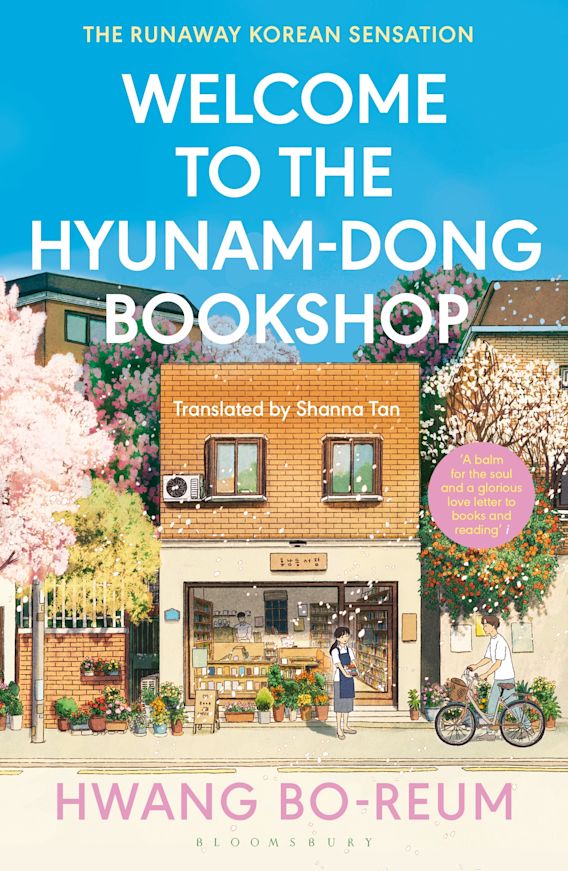
  • Welcome to the Hyunam-Dong Bookshop

    Welcome to the Hyunam-Dong Bookshop

    Released 2022, 301 pages.

    There was only one thing on her mind.

    ‘I must start a bookshop.’

    Yeongju did everything she was supposed to, go to university, marry a decent man, get a respectable job. Then it all fell apart. Burned out, Yeongju abandons her old life, quits her high-flying career, and follows her dream. She opens a bookshop.

    In a quaint neighbourhood in Seoul, surrounded by books, Yeongju and her customers take refuge. From the lonely barista to the unhappily married coffee roaster, and the writer who sees something special in Yeongju – they all have disappointments in their past. The Hyunam-dong Bookshop becomes the place where they all learn how to truly live.

    Rating: 4.5 out of 5.

    This is a story that explores the perspectives of a range of characters and their unique problems. Throughout, they find that the least likely of ventures can lead them exactly where they need to be, and all of them have one thing in common: the Hyunam-Dong Bookshop.

    At first, I did not think much of this story. It was not that I did not enjoy the sentiment of it, but it felt like another one of those books with a similar plot. However, over time I noticed I was often applying it to my own life.

    The plot is subtle but beautiful. Each character’s life revolves around the bookshop, where, essentially, they ‘find themselves’, whether through someone they meet or a book they read. Like What You Are Looking For Is In The Library, the main character, Yeongju, acts as a book therapist – helping people by recommending a book that correlates to their situation.

    Whilst the characters are not overly flavourful – it doesn’t make the story dull; it actually helps the plotline shine. Each character experiences their own set of issues – though the aim is not to solve them but to help the characters find peace in their own lives with small changes.

    This is a truly relaxing book that I recommend to literally anyone. It is short and sweet. Though, it would particularly interest readers who enjoy books such as The Full Moon Coffee Shop, Letters from the Ginza Shinodo Stationary Shop, etc.

    Click link below for Storygraph overview, which includes general rating, summary (same as above) and other reviews.

    LINK TO STORYGRAPH PROFILE

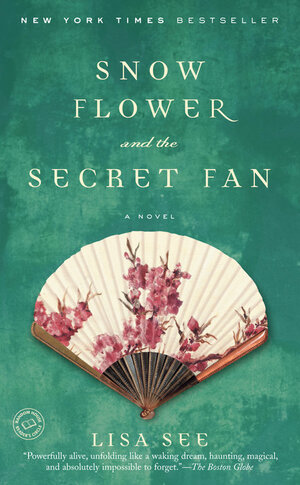
  • Snowflower and the Secret Fan

    Snowflower and the Secret Fan

    Released 2005, 269 Pages.

    Lily is haunted by memories–of who she once was, and of a person, long gone, who defined her existence. She has nothing but time now, as she recounts the tale of Snow Flower, and asks the gods for forgiveness.

    In nineteenth-century China, when wives and daughters were foot-bound and lived in almost total seclusion, the women in one remote Hunan county developed their own secret code for communication: nu shu (“women’s writing”). Some girls were paired with laotongs, “old sames,” in emotional matches that lasted throughout their lives. They painted letters on fans, embroidered messages on handkerchiefs, and composed stories, thereby reaching out of their isolation to share their hopes, dreams, and accomplishments.

    With the arrival of a silk fan on which Snow Flower has composed for Lily a poem of introduction in nu shu, their friendship is sealed and they become “old sames” at the tender age of seven. As the years pass, through famine and rebellion, they reflect upon their arranged marriages, loneliness, and the joys and tragedies of motherhood. The two find solace, developing a bond that keeps their spirits alive. But when a misunderstanding arises, their lifelong friendship suddenly threatens to tear apart.

    Rating: 4.5 out of 5.

    Snowflower and the Secret Fan follows Lily as she must participate in the rituals that mark the beginning of womanhood. Luckily, she has her Laotong – sister for life, or old same – to endure by her side. Though, as they grow together – and apart – Lily starts to uncover the secrets kept from her in childhood.

    Thankfully, this is a beautiful story – because I have three other Lisa See books on the shelf and chucking them all would have been rather inconvenient.

    The plot is interesting, emotional and insightful. I also found it quietly captivating. Like Pachinko, it is not full of big reveals and cliffhangers, but it still captures you and keeps you intrigued.

    Reading the expectations of girls and women from this period was arresting, especially from a modern, Western perspective. The descriptions of the practices they have to endure is intense and graphic but also informative – it really puts the reader in their shoes (pun-intended).

    The characters feel authentic to the time – though I have not studied the mannerisms of Chinese women in the Nineteenth century. They are subtle, strong and unflappable. I also enjoyed the exploration of some of the more private, intimate moments the characters experience.

    Click link below for Storygraph overview, which includes general rating, summary (same as above) and other reviews.

    LINK TO STORYGRAPH PROFILE

  • Weyward

    Weyward

    Released 2023, 329 pages.

    I am a Weyward, and wild inside.

    2019: Under cover of darkness, Kate flees London for ramshackle Weyward Cottage, inherited from a great aunt she barely remembers. With its tumbling ivy and overgrown garden, the cottage is worlds away from the abusive partner who tormented Kate. But she begins to suspect that her great aunt had a secret. One that lurks in the bones of the cottage, hidden ever since the witch-hunts of the 17th century.

    1619: Altha is awaiting trial for the murder of a local farmer who was stampeded to death by his herd. As a girl, Altha’s mother taught her their magic, a kind not rooted in spell casting but in a deep knowledge of the natural world. But unusual women have always been deemed dangerous, and as the evidence for witchcraft is set out against Altha, she knows it will take all of her powers to maintain her freedom.

    1942: As World War II rages, Violet is trapped in her family’s grand, crumbling estate. Straitjacketed by societal convention, she longs for the robust education her brother receives—and for her mother, long deceased, who was rumored to have gone mad before her death. The only traces Violet has of her are a locket bearing the initial W and the word weyward scratched into the baseboard of her bedroom.

    Rating: 5 out of 5.

    REVIEW

    This story follows three women through three different time periods (1619, 1942 and 2019). Each woman has to endure their own struggles, which are all at the hands of men – however, they find strength in the inheritance of being a Weyward woman.

    This is such a beautifully written, powerful story and I enjoyed every minute of it.

    I have come to really appreciate novels that switch perspectives every chapter or so. It keeps everything compelling and captivating. Opposed to having one point of view for five plus chapters – whilst this can be more immersive, it also stagnates the storytelling.

    Having the chapters jump back and forth to different time periods really emphasizes the strength of ancestral bonds. It is touching how much their ancestry acts as a support for the not-so-different struggles they face throughout the story.

    Some sensitive topics are covered, such as domestic violence and rape. Personally, I think Hart describes it in a way that captures enough to feel the emotions and anger – but not enough to become overly graphic or crass (to me).

    This is such a powerful story that everyone needs to read. Historical fiction, feminist literature and magical realism readers would also enjoy Weyward.

    Click link below for Storygraph overview, which includes general rating, summary (same as above) and other reviews.

    LINK TO STORYGRAPH PROFILE