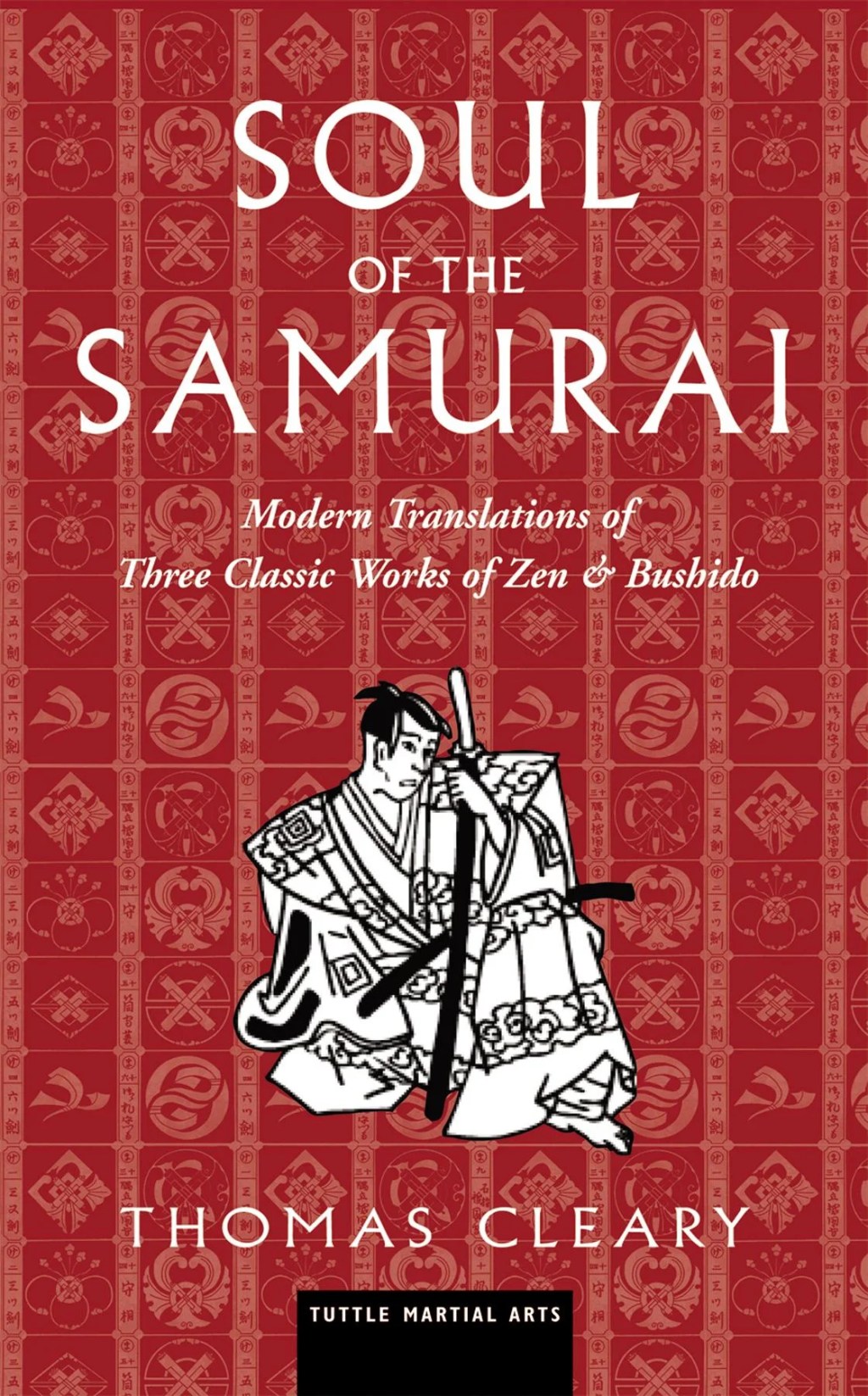
By Thomas Cleary
SPOILER-FREE*
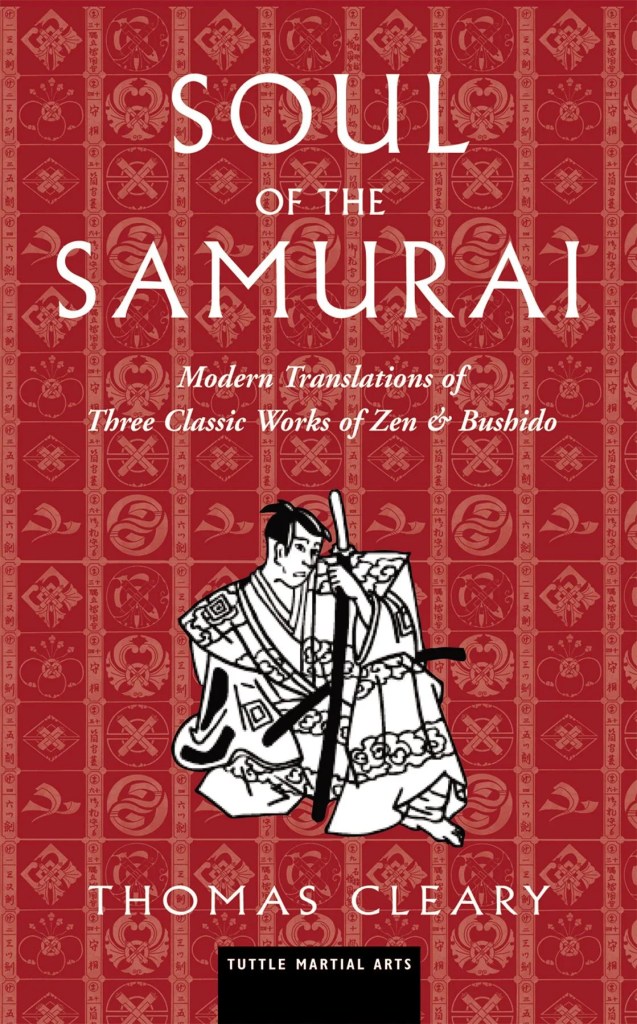
The three works of Zen & Bushido translated in Soul of the Samurai are:
- The Book of the Sword by Yagyu Munenori
- The Inscrutable Subtlety of Immovable Wisdom by Takuan Soho
- The Peerless Sword by Takuan Soho
Yagyu was a renowned swordsman and chief of the Shogun’s secret police, while Takuan was the Zen spiritual mentor to the Emperor. This samurai philosophy book contains the first English translations of their seminal writings on Bushido. Cleary not only provides clear and readable translations but comprehensive notes introducing the social, political, and organizational principles that defined samurai culture–their loyalty to family, their sense of service and duty, and their political strategies for dealing with allies and enemies.
REVIEW
THEMES: EDUCATIONAL, NON-FICTION, PHILISOPHICAL, HISTORICAL.
* To preface, I will take excerpts from the book and put it into this review – I do not think you can really ‘spoil’ a non-fiction book, but if you do not want to know anything written in the book, then click off the review. *
As said in the overview, Soul of the Samurai is split into three parts: The Book of The Sword, The Inscrutable Subtlety of Immovable Wisdom and The Peerless Sword.
Soul Of the Samurai explores the various ideologies and beliefs that contribute to the Art of becoming a Samurai. According to ‘The Great Learning‘ [Yagyu Munenori, The Killing Sword] you can only attain true wisdom through life experience. Therefore, this whole description is contradictory, as the mere existence of the book goes against the art itself.
Throughout Yagyu and Takuan’s writing, Cleary, interjects to clarify the archaic language used, as well as to explain the ideological background. I found this helpful as someone new to reading older texts – however, if you have prior knowledge on the subject, than you may find this futile.
The text written in italics is Munenori and Takuan, whereas the texts written by Cleary are not.
There is a lot to be learnt from this book, especially regarding your individual outlook on the world. The concepts were informative and helpful – but it is definitely an eye of the beholder situation. To put it simply, it is like when you stare at a piece of art – you may see something in it that you connect with and relate to, but the person next to you may find it dull and monotonous. For me, this book helped me contextualize the way I view experiences – it almost acts as a self-help book.
A couple quotes that I found insightful.
‘Watching in stolen glances, the dragonfly evades the shrike’
Yagyu Munenori
Zen Master Takuan
‘If you look at a tree and see only one of its red leaves, you don’t see the rest of the foliage. If you look at the tree casually without setting your mind to one leaf, you see all the foliage. If your mind is taken up by one leaf, then you don’t see the rest of the leaves, but if you don’t set your mind on one, then you can see all hundred thousand of them.
This gives you a gist of the style of writing, I’ve added them to act as a guide to whether this is the book for you.
The downside (for me) is the repetition of ideas, though, arguably that is the point. I could have done without reading the same concept, thirty times in thirty different ways. Spoiler, you will learn A LOT about sickness of the mind.
I would recommend this to someone who is interested in the Art of Samurai, however maybe not a beginner. As well as someone who is looking for some direction in changing their outlook on life.
Click link below for Storygraph overview, which includes general rating, summary (same as above) and other reviews.
 The Book Slump