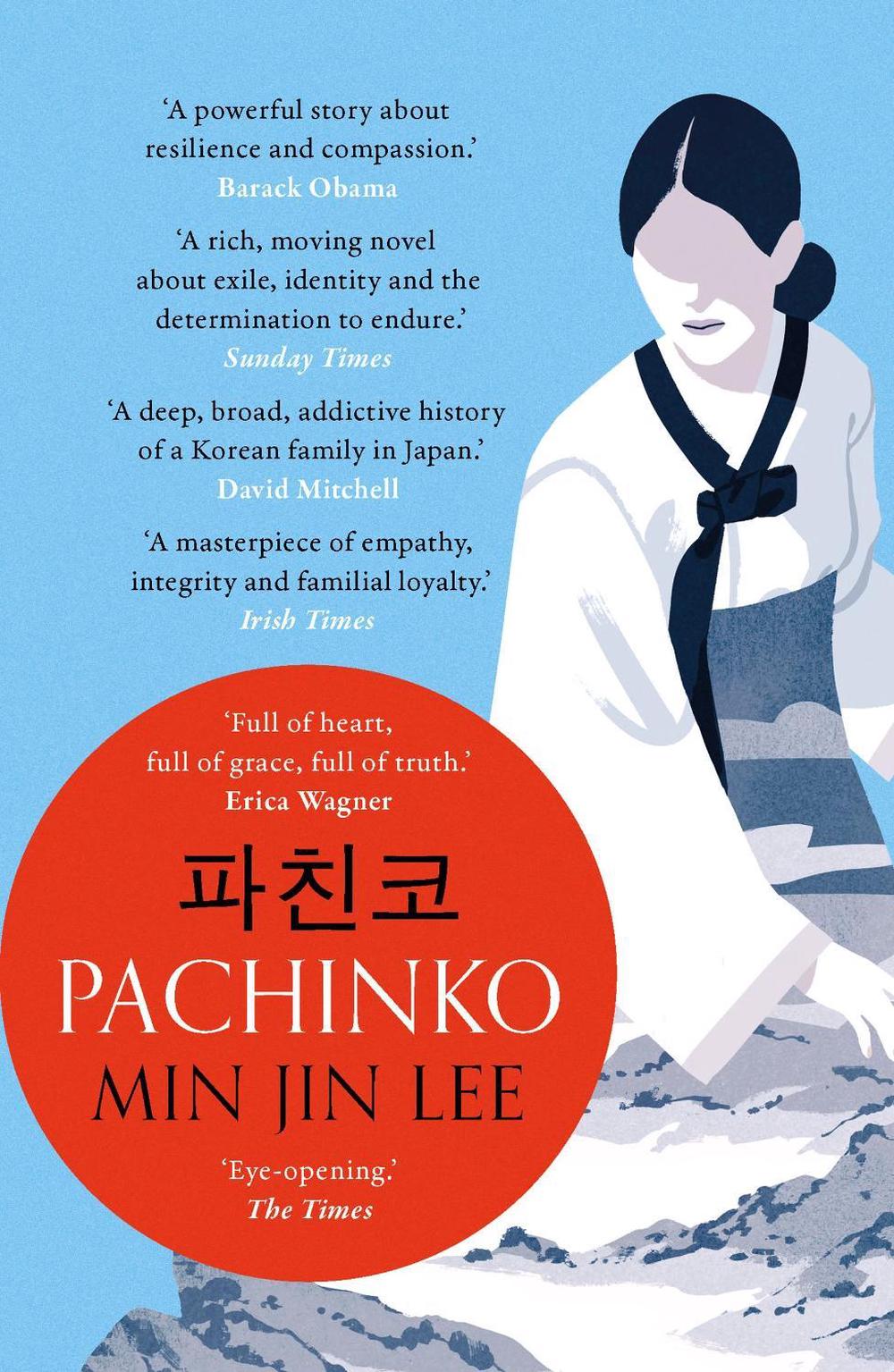
By Min Jin Lee
SPOILER-FREE
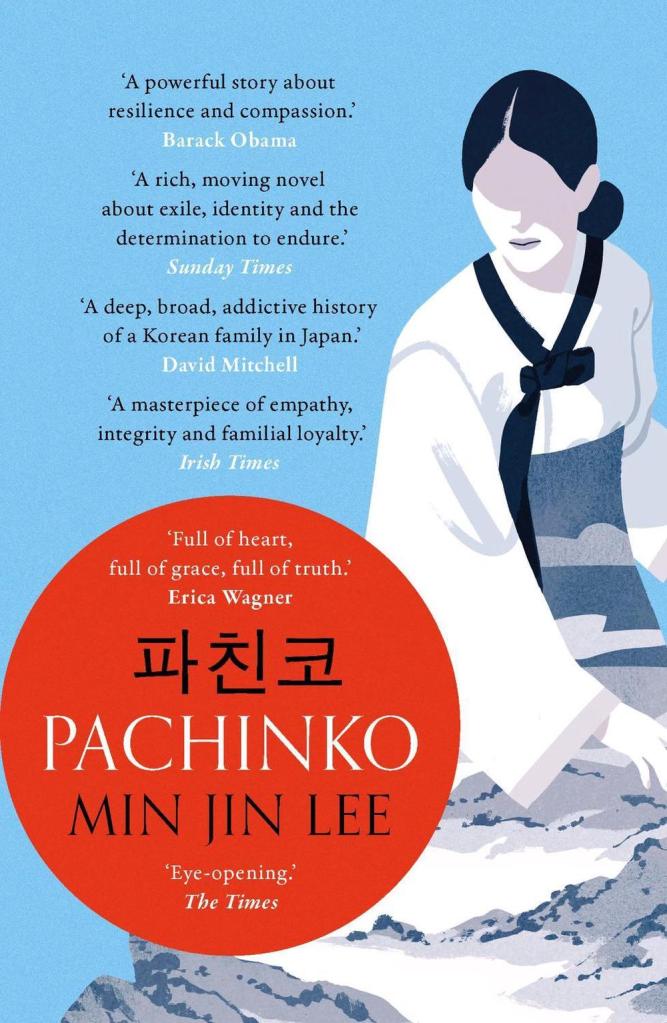
In the early 1900s, teenaged Sunja, the adored daughter of a crippled fisherman, falls for a wealthy stranger at the seashore near her home in Korea. He promises her the world, but when she discovers she is pregnant—and that her lover is married—she refuses to be bought. Instead, she accepts an offer of marriage from a gentle, sickly minister passing through on his way to Japan. But her decision to abandon her home, and to reject her son’s powerful father, sets off a dramatic saga that will echo down through the generations.
REVIEW
THEMES: HISTORICAL, ASIAN FICTION, EMOTIONAL, MEDIUM-PACED.
Pachinko by Min Jin Lee is a touching story that follows over a hundred years in the life of one Korean family. At the beginning of the story, Sunja is introduced as the daughter of a crippled fisherman. Readers follow Sunja into adulthood, where she meets a wealthy stranger who takes a special interest in her. What transpires between them forces Sunja to leave for Japan to start a new life—otherwise, her family will face ruin.
Pachinko was introduced to me by a friend who claimed it was their favourite book of all time. This was a big statement, so of course, I gave it a go. They were correct—this is one of the most beautiful books I have ever read.
Min Jin Lee’s writing style is amazing, although it is an acquired taste, as she has a habit of time jumps and leaving certain conclusions open. I absolutely love the way she tells a story; she does not dwell, and she often lets readers draw their own conclusions—or she will casually reveal prior resolutions later in the story. I have never read a book written quite like hers, before or since.
The plot is well planned and brilliantly executed. Whilst it tells a simple story of hardship and struggle, it is also deeply complex and real. This makes sense, considering it draws from historical events. The descriptions, character depth, and dialogue feel as though they were plucked from real life. I still vividly remember everything that takes place in this book and know it will stay with me for the rest of my life.
The closest book I could compare it to is Memoirs of a Geisha—not just because it is set in Japan (though contextually that helps), but because of the gruff nature of certain characters and the realistic portrayal of life during times of struggle.
Please, please, please read this book. If you love historical fiction, it’s a must. However, everyone should give it a try.
Click link below for Storygraph overview, which includes general rating, summary (same as above) and other reviews.
 The Book Slump