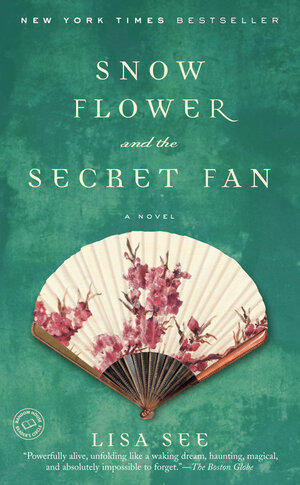
By Lisa See
SPOILER-FREE
Lily is haunted by memories–of who she once was, and of a person, long gone, who defined her existence. She has nothing but time now, as she recounts the tale of Snow Flower, and asks the gods for forgiveness.
In nineteenth-century China, when wives and daughters were foot-bound and lived in almost total seclusion, the women in one remote Hunan county developed their own secret code for communication: nu shu (“women’s writing”). Some girls were paired with laotongs, “old sames,” in emotional matches that lasted throughout their lives. They painted letters on fans, embroidered messages on handkerchiefs, and composed stories, thereby reaching out of their isolation to share their hopes, dreams, and accomplishments.
With the arrival of a silk fan on which Snow Flower has composed for Lily a poem of introduction in nu shu, their friendship is sealed and they become “old sames” at the tender age of seven. As the years pass, through famine and rebellion, they reflect upon their arranged marriages, loneliness, and the joys and tragedies of motherhood. The two find solace, developing a bond that keeps their spirits alive. But when a misunderstanding arises, their lifelong friendship suddenly threatens to tear apart.
REVIEW
THEMES: HISTORICAL, EMOTIONAL, TENSE, SAD, MEDIUM-PACED.
Snowflower and the Secret Fan follows Lily as she must participate in the rituals that mark the beginning of womanhood. Luckily, she has her Laotong – sister for life, or old same – to endure by her side. Though, as they grow together – and apart – Lily starts to uncover the secrets kept from her in childhood.
Thankfully, this is a beautiful story – because I have three other Lisa See books on the shelf and chucking them all would have been rather inconvenient.
The plot is interesting, emotional and insightful. I also found it quietly captivating. Like Pachinko, it is not full of big reveals and cliffhangers, but it still captures you and keeps you intrigued.
Reading the expectations of girls and women from this period was arresting, especially from a modern, Western perspective. The descriptions of the practices they have to endure is intense and graphic but also informative – it really puts the reader in their shoes (pun-intended).
The characters feel authentic to the time – though I have not studied the mannerisms of Chinese women in the Nineteenth century. They are subtle, strong and unflappable. I also enjoyed the exploration of some of the more private, intimate moments the characters experience.
All in all, I really enjoyed reading this book and would say the storytelling and struggle is akin to Pachinko. I would recommend this to anyone who loves sister stories, historical fiction or Chinese fiction.
Warning: This book does contain domestic violence.
Click link below for Storygraph overview, which includes general rating, summary (same as above) and other reviews.

 The Book Slump