Category: Spoiler Book Reviews

  • Alchemised

    Alchemised

    Released 2025, 1029 pages.

    What is it you think you’re protecting in that brain of yours? The war is over. Holdfast is dead. The Eternal Flame extinguished. There’s no one left for you to save.”

    Once a promising alchemist, Helena Marino is now a prisoner—of war and of her own mind. Her Resistance friends and allies have been brutally murdered, her abilities suppressed, and the world she knew destroyed.

    In the aftermath of a long war, Paladia’s new ruling class of corrupt guild families and depraved necromancers, whose vile undead creatures helped bring about their victory, holds Helena captive.

    According to Resistance records, she was a healer of little importance within their ranks. But Helena has inexplicable memory loss of the months leading up to her capture, making her enemies wonder: Is she truly as insignificant as she appears, or are her lost memories hiding some vital piece of the Resistance’s final gambit?

    To uncover the memories buried deep within her mind, Helena is sent to the High Reeve, one of the most powerful and ruthless necromancers in this new world. Trapped on his crumbling estate, Helena’s fight—to protect her lost history and to preserve the last remaining shreds of her former self—is just beginning. For her prison and captor have secrets of their own . . . secrets Helena must unearth, whatever the cost.

    Rating: 2 out of 5.

    Helena Marino is a prisoner being held by the enemy she once fought against. She is imprisoned in the residence of the High Reeve who is notorious for his murderous rampages. Even though her records show she is nothing more than a healer, she possesses something they want. The issue is, it is hidden within her mind and neither they nor Helena can access it. Helena must dig deep to reveal what is being hidden within her, though that raises the question… is it hidden for a reason? And will uncovering it save or doom her?

    Does this book need to be this long?

    No. It really and truly does not. This could have been 500 pages.

    The plot of the story is strong; the settings are described in detail, and I could clearly picture every place described. There is no misconception that SenLinYu is a talented writer. There were multiple points where I was looking forward to coming back to the story.

    Whilst I did enjoy aspects of the book, the characters fell entirely flat.

    Rant incoming.

    I remember once I saw someone say that women often have to prove their greatness, whereas men do not. Helena and Luke are perfect examples. Luke is described as this incredible and selfless person, yet I never really see it. Helena sacrifices herself to the point of becoming a martyr, just for a measly pat on the back. Luke is simply decent – which is rather easy when you are from a privileged family!

    You are kind of beaten over the head with how selfless Helena is. It gets to a point where she is just naive. I could never relate to someone who will ruin themselves for people who could care less, so maybe that is why I dislike her.

    There are other bland and unrelatable characters throughout the book, but these are things I can get past.

    What I can’t get past is normalising abuse. Just because this book is set in a time of war, where everything is dark and dreadful does not mean you can minimise what Kaine does to Helena. Kaine literally beats Helena senseless, violates her and humiliates her for about 500 pages. These instances are ‘mitigated’ by the fact that Helena is persevering because she is secretly trying to gain his trust. Although, conveniently when the time comes to use this secret ammunition, she has grown too fond of him. Shocker. All of this is simply because he cried about his dead mum and got hurt by his own alliance. Apparently, this wipes away all his horrendous abuse. The kicker is that he justifies it by saying he was doing it all to deter her… as if it was for her own good. After this point, he is romanticized – or their relationship is.

    This continues to spread the message; ‘Ladies, if he is horrible to you just try a little harder because at some point, he may reward you with affection!’ And its harmful.

    What gets me the most, is in the end, he is made out to be this misunderstood and valiant person. He literally murdered hundreds of innocent people to find a woman who he treats as more of a possession than anything else. I felt violated reading as Helena slowly and reluctantly gave into his advances.

    I also just found out that this is a Hermione-Draco fanfiction come to life. I am officially turned off.

    Sidenote: Crowther reminded me of Little Finger from GOT.

    I will end this rant, even though I have more to say, but I don’t want to come off as a complete buzzkill.

    In saying all this, I am not a big fan of ‘dark academia/fantasy’, so that definitely contributes to my rating.

    From a fantasy reader (or just a reader), I would give this one a miss.

    Click link below for Storygraph overview, which includes general rating, summary (same as above) and other reviews.
    LINK TO STORYGRAPH PROFILE

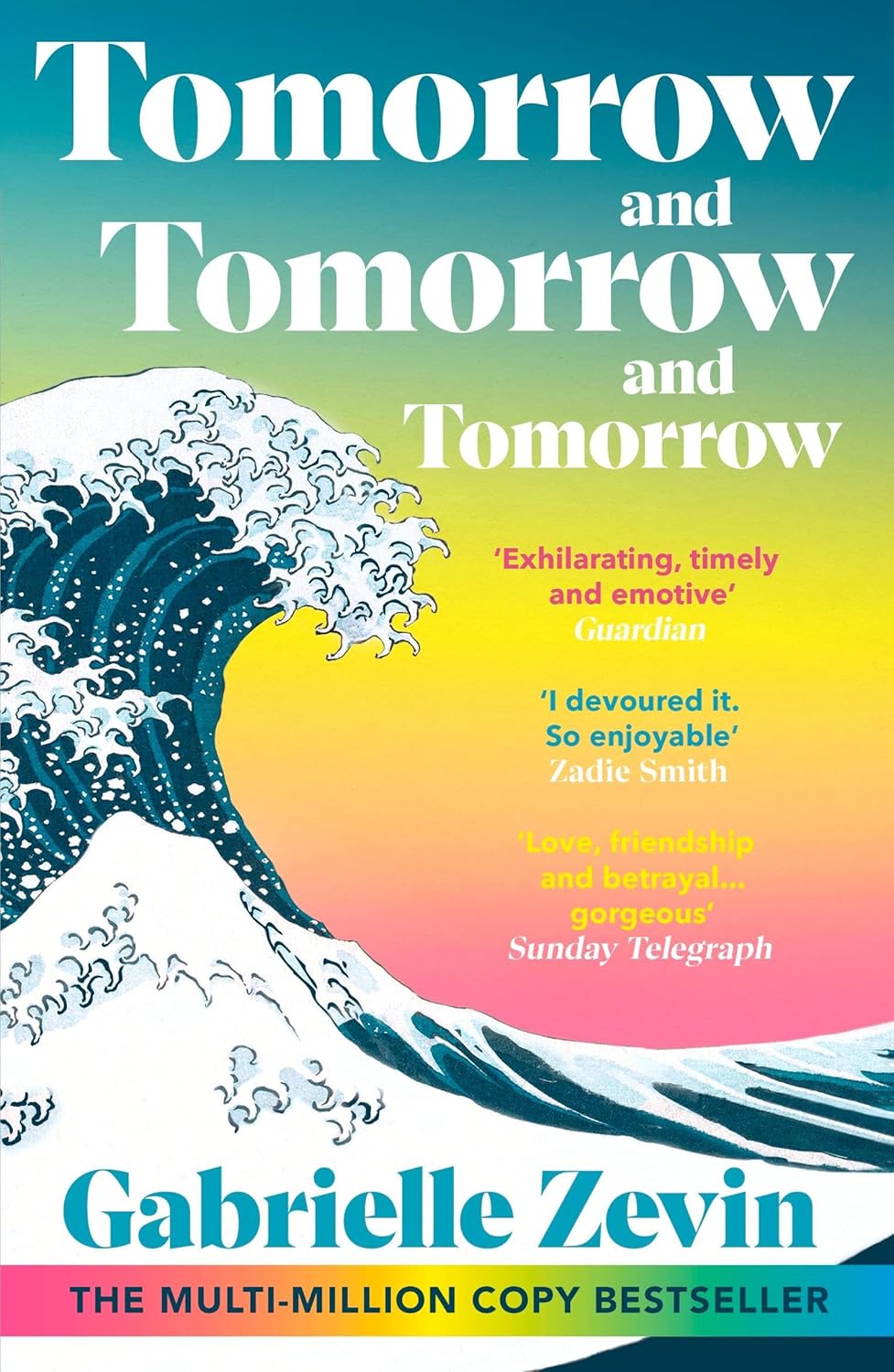
  • Tomorrow and Tomorrow and Tomorrow

    Tomorrow and Tomorrow and Tomorrow

    Released 2022, 401 pages.

    On a bitter-cold day, in the December of his junior year at Harvard, Sam Masur exits a subway car and sees, amid the hordes of people waiting on the platform, Sadie Green. He calls her name. For a moment, she pretends she hasn’t heard him, but then, she turns, and a game begins: a legendary collaboration that will launch them to stardom. They borrow money, beg favors, and, before even graduating college, they have created their first blockbuster, Ichigo: a game where players can escape the confines of a body and the betrayals of a heart, and where death means nothing more than a chance to restart and play again. This is the story of the perfect worlds Sam and Sadie build, the imperfect world they live in, and of everything that comes after success: Money. Fame. Duplicity. Tragedy.

    Spanning thirty years, from Cambridge, Massachusetts, to Venice Beach, California, and lands in between and far beyond, Gabrielle Zevin’s Tomorrow, and Tomorrow, and Tomorrow is a dazzling and intricately imagined novel that examines the multifarious nature of identity, games as artform, technology and the human experience, disability, failure, the redemptive possibilities in play, and above all, our need to connect: to be loved and to love. Yes, it is a love story, but it is not one you have read before. 

    Rating: 4 out of 5.

    Sadie Green and Sam Masur love each other. They have a strong connection, which stems from their shared love of video games. They have been friends since childhood, after meeting at a hospital, under unfortunate circumstances. Despite their friendship resulting in a lifechanging venture, they must also brave heartbreak and betrayal. The question is, can they?

    That was not what I was expecting.

    The portrayal of friendship, especially Sadie and Sam’s, reminds me of Demon Copperhead. What I mean, is that it is so raw and real and doesn’t shy away from ugliness. Among many other things, I think the mark of a good book is when you hate the characters… some of the time. Obviously, I need balance, otherwise, If I detest a character I get into the habit of mumbling angrily and it’s not a good look.

    I am impressed with how much story Gabrielle Zevin is able to fit into 400 pages. I have recently read a 1000-page book, and the characters don’t have half the depth of these ones (don’t even get me started). I am actually surprised that it is 400 pages, because it felt like so much more.

    A fair warning, there are intense themes in this book, including; suicide, gore, sexual assault and, honestly, a consistent bleakness. That’s not to say there is no happiness in the book, but from my perspective, Zevin aims to perpetuate authentic relationships and events. So, it is not sugar-coated or glossed over.

    I feel let down by Sadie’s character. There was so much potential for her, but all she is reduced to is her experience with men. Whilst interacting with men is a fact of life, there is more to it than that. All of Sadie’s lore revolves around seeking validation from men or being betrayed by them. Why didn’t Zevin bring back her sister and explore that?

    I am getting a little fed up with sexual assault/misconduct being a constant in female character building. I have mentioned this before in previous reviews. Sometimes, I am unsurprised due to the calibre of the stories, but this one had potential – hence my disappointment.

    If you like realistic books, like Demon Copperhead, I would give this one a go.

    Click link below for Storygraph overview, which includes general rating, summary (same as above) and other reviews.

    LINK TO STORYGRAPH PROFILE

  • Bunny

    Bunny

    Released 2019, 305 pages.

    Samantha Heather Mackey couldn’t be more of an outsider in her small, highly selective MFA program at New England’s Warren University. A scholarship student who prefers the company of her dark imagination to that of most people, she is utterly repelled by the rest of her fiction writing cohort–a clique of unbearably twee rich girls who call each other “Bunny,” and seem to move and speak as one. 

    But everything changes when Samantha receives an invitation to the Bunnies’ fabled “Smut Salon,” and finds herself inexplicably drawn to their front door–ditching her only friend, Ava, in the process. As Samantha plunges deeper and deeper into the Bunnies’ sinister yet saccharine world, beginning to take part in the ritualistic off-campus “Workshop” where they conjure their monstrous creations, the edges of reality begin to blur. Soon, her friendships with Ava and the Bunnies will be brought into deadly collision. 

    Rating: 1.5 out of 5.

    Samantha Heather Mackey – a student in a competitive MFA programme – has to deal with four peculiar women in her class, who affectionately call each other ‘bunny’. Despite frequently expressing her dislike for the bunnies, she cannot hide her pleasure when she is invited to one of their exclusive hangouts. As someone with few friends, she decides to go. Though, they are everything and nothing like she imagined – it is interesting how one night can push someone so far down the rabbit hole.


    Bunny is a novel which I remember in vivid detail – so I can confidently share that it is a book that leaves an impression.

    The characters are interesting, though a little cliche (loner who wants to fit in, nonconformist emo/alternative best friend, and a clique of ‘mean’ girls). However, Awad uses the plot of the story to distract from the unoriginal character dynamics – in saying that, with such an intense story, having simpler structures may be better suited. Otherwise, it could become over-the-top and confusing.

    Awad has a descriptive writing style and knows how to keep her audience captivated – I read this a while ago and still virtually remember everything that happens, which is rare, as I normally only remember snippets. Everything was so colourful and prominent; it really felt like I was Samantha.

    The reason I have given such a low rating is because of the ending. Throughout the entire book, I struggled to differentiate between what was real and what was a hallucination – which became very tiring, very quickly. Whilst I noticed she has schizophrenia halfway through, I thought maybe just some of it was made up – but to find out it was all fake, I was livid. It is the equivalent to ‘and then she opened her eyes’. Essentially, I spent hours of my time reading a fictional manic episode – if it was a non-fiction at least I would have learnt something. Obviously, this is all personal preference, though I will never understand how anyone can enjoy being messed with for three hundred pages.

    This book reminds me of Boy Parts by Eliza Clark (which I also was not a big fan of), so if you enjoyed that, then definitely give Bunny a try.

    Click link below for Storygraph overview, which includes general rating, summary (same as above) and other reviews.

    LINK TO STORYGRAPH PROFILE

  • The Sailor Who Fell from Grace with the Sea

    The Sailor Who Fell from Grace with the Sea

    Released 1963, 181 pages,

    A band of thirteen-year-old boys reject the stupidity of the adult world. They decide it is illusory, hypocritical and sentimental, and train themselves in a brutal callousness they call ‘objectivity’. When the mother of one of them begins an affair with a ship’s officer, he and his friends idealise the man at first, but it is not long before they conclude that he is, in fact, soft and romantic. They regard this disillusionment as an act of betrayal on his part – and the retribution is deliberate and horrifying.

    Rating: 4 out of 5.

    Warning; animal abuse, incestuous behaviours and gore.

    The Sailor Who Fell from Grace with the Sea follows a single mother and her son, Noboru. The dynamic between the two is complex and unconventional – which only becomes more bizarre once his mother meets Ryuji, an experienced sailor. Noboru and his friends start to develop a set of expectations on how people should behave, and unfortunately Ryuji is not meeting his criteria.

    This is such a strange book, it makes you wonder what the author experienced to even think to write it. It is not a ‘horror’, per say, but at times reads like one.

    The characters are interesting. Noboru and his friends are the epitome of childish arrogance, with their self-assured dogmatic views. It perfectly captures that time of youth when you think you know everything and it makes me cringe. However, their emphasis on male behaviours was an unexpected surprise. They set such rigid standards for how men should perform in society, and if they don’t act accordingly, they consider it unheroic- which is not what I would have anticipated from a group of young boys.

    His mother brings some much-needed normality to the book, nicely evening out all the absurdity. I found it interesting that she is the only main character who remains nameless. The boyfriend of the mother, Ryuji, is my favourite character. It is clear that he is simply making the best out of a strange situation and is a kind person. Though, his lenient response to Noboru spying on his mother was disturbing – though, what is more horrifying is the fact that Noboru wanted to be punished.

    The plot is intense and confronting – a child spying on his mother through a peephole, mercilessly beating a cat and murdering his mother’s boyfriend. Somehow, I felt nowhere near as bleak as I have with other books, that are far less severe.

    Overall, I enjoyed the book, despite the disturbing content. I would recommend to horror readers – or someone who has an interest in books that feature peculiar family dynamics.

    Click link below for Storygraph overview, which includes general rating, summary (same as above) and other reviews.

    LINK TO STORYGRAPH PROFILE.

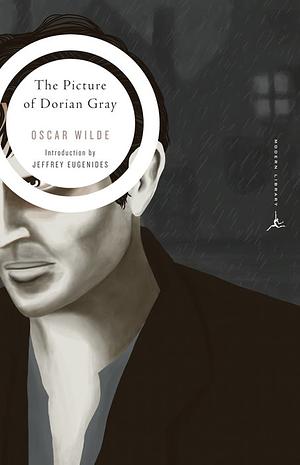
  • The Picture of Dorian Gray

    The Picture of Dorian Gray

    By Oscar Wilde

    Released 1890, 272 pages.

    ‘I am jealous of everything whose beauty does not die. I am jealous of the portrait you have painted of me … Why did you paint it? It will mock me some day – mock me horribly!’

    A story of evil, debauchery and scandal, Oscar Wilde’s only novel tells of Dorian Gray, a beautiful yet corrupt man. When he wishes that a perfect portrait of himself would bear the signs of ageing in his place, the picture becomes his hideous secret, as it follows Dorian’s own downward spiral into cruelty and depravity. The Picture of Dorian Gray is a masterpiece of the evil in men’s hearts, and is as controversial and alluring as Wilde himself.

    Rating: 3.5 out of 5.

    THEMES: DARK, REFLECTIVE, HORROR, LITERARY, FAST-PACED.

    A plot description was surprisingly hard to come by, but as in the overview, The Picture Of Dorian Gray is about a man who becomes obsessed with his appearance and will do anything to stop himself from aging.

    What I enjoy about this book is the plot, the characters and Wilde’s expression.

    The plot is captivating and well thought out. The best way to describe it is that you are experiencing someone else’s mania – but not in a jarring way that confuses you. Personally, I have yet to read anything like it, which is surprising considering the number of unavoidable repeats on the market nowadays, where the same idea gets re written in ten different ways.

    The characters feel appropriate to the time. Now, this is coming from someone who has no idea what they’re talking about, but if asked to show an accurate depiction of nineteenth-century Victorian elites, I would show an excerpt from this book. The characters are eccentric yet predictable — Gray being the exception. He has a raw, unapologetic nature, which leads me to believe he may have been Wilde’s alter ego.

    ‘Wilde’s expression’ means that I could feel him through his writing. Whilst I do not think this book is ‘LGBTQIA+’ – as there is no explicit homosexuality – Wilde’s writing conveys his preference for men, as there is an intensity within the male friendships (Gray and Wotton), that exceeds anything platonic. Then again, knowing Wilde’s sexual orientation may have swayed my judgement.

    Wilde’s writing style is generally consistent, though halfway through, there’s about ten pages of drivel. I understand the purpose: to encapsulate mania and/or portray the bottomless time Gray has on his hands — yet it falls flat and reads like word vomit. It feels as though Wilde is trying to show off his expansive knowledge of different subjects in a covert way.

    I’m not a fan of Lord Wotton’s character. The way he is written is so pretentious. His constant witty remarks and over-the-top language feel affected. And I have to blame Wilde’s writing, not just my dislike for the character.

    I also found the ending a little cliché — although, to be fair, this might be the story that started it all.

    All in all, it’s a decent classic. I banged it out in one day — though I’d avoid that. It’s bleak and gave me a headache.

    I would recommend this to lovers of classics (though it has probably already been ticked off the list), those looking to get into classic literature, and horror readers.

    Click link below for Storygraph overview, which includes general rating, summary (same as above) and other reviews.

    LINK TO STORYGRAPH PROFILE.

  • Memoirs Of A Geisha

    Released 1997, 448 pages.

    In “Memoirs of a Geisha,” we enter a world where appearances are paramount; where a girl’s virginity is auctioned to the highest bidder; where women are trained to beguile the most powerful men; and where love is scorned as illusion.

    Rating: 4.5 out of 5.

    This book definitely deserves the reputation it has earned. I always see it in the second-hand shops, so I – unfairly – assumed it was ‘good’ but nothing special. This was one of those books where I knew within the first few pages that I would love it.

    The relationship dynamics that Sayuri has with each character feels realistic. Golden is able to subtly display the impact each character left on Sayuri, no matter how small – in regard to the roles they played in her life. His writing style is immersive, and his storytelling allows the mind to wander into the pages of the book.

    I love how female-centred this story is. Regardless of any transgressions the women committed, they have strength in their own right and are respected in their role.

    It is a common misconception that a Geisha is likened to a prostitute – whilst this is addressed in the book – it is not pushed or stigmatized like it could have been. Although, I do not want to praise an author for doing the bare minimum – as it should be expected that a male, white author would respect a traditional, Japanese (female dominated), profession.

    I really did not like the ending of this book. Throughout the story, the readers ‘watch’ as Sayuri becomes wise and independent as a result of years of adversity. Whilst she did pine for the Chairman, it did not feel intense or reciprocated enough to derail her self-made image. Which is why the whole book lost some integrity when Golden gave into the ‘happily-ever-after’ ploy. By doing this, it continues the narrative that, whilst a woman can have an elaborate list of achievements and hardships, a man loving her back makes it all worth it. Sickening.

    The worst part of it (to me) is that the Chairman is made out to be some sort of protagonist. He groomed Sayuri until adulthood, watched as she suffered through life and then confesses his ‘strong’ feelings for her, whilst married. He is just as bad as the rest of the men, save for the Baron.

    I would recommend anyone give this book a go, especially if you are interested in Japanese history or the Japanese culture.

    Click link below for Storygraph overview, which includes general rating, summary (same as above) and other reviews.
    LINK TO STORYGRAPH PROFILE

  • Our Wives Under The Sea

    Released 2022, 232 pages.

    Miri thinks she has got her wife back, when Leah finally returns after a deep-sea mission that ended in catastrophe. It soon becomes clear, though, that Leah may have come back wrong. Whatever happened in that vessel, whatever it was they were supposed to be studying before they were stranded on the ocean floor, Leah has carried part of it with her, onto dry land and into their home.

    To have the woman she loves back should mean a return to normal life, but Miri can feel Leah slipping from her grasp. Memories of what they had before – the jokes they shared, the films they watched, all the small things that made Leah hers – only remind Miri of what she stands to lose. Living in the same space but suddenly separate, Miri comes to realize that the life that they had might be gone.

    Rating: 4 out of 5.

    Whilst it is accurate to describe this book as ‘horror’, it is not in the way you would think – as it is nothing like the horror books I have read prior. The best way I can describe it, is that it is ‘symbolic horror’, which I am pretty sure I just made up.

    Armfield’s storytelling was exceptional, I have never been more captivated by an author’s style of writing before. She has such a relatable way of conveying points. It felt conversational. By this I mean quotes like, ‘It went on too long and too helplessly. The way anyone who sneezes more than four times abruptly loses sympathy of an audience’. To me, this is such a human experience, articulated in a clever and witty way.

    The juxtaposition between Miri and Leah’s point of view was jarring. It makes it hard for the reader to decide who to sympathize with more. ‘Watching’ Miri mourn her living wife and revisit their fondest memories, then reading Leah’s final letters to Miri was devastating. I felt a pang in my heart during their final parting – the fact they had to let go of each other but insured that the other person was allowed their closure was touching.

    The biggest takeaway I got from this story is to treasure the relationship you have with your loved ones, and not to take it for granted.

    I would recommend this to someone who is trying to get into horror as it is a tame gateway book. Though, I would recommend anyone give this book a go, as Armfield’s writing style is very charming and fresh.

    Click link below for Storygraph overview, which includes general rating, summary (same as above) and other reviews.

    LINK TO STORYGRAPH PROFILE

  • Big Swiss

    Released 2023, 325 pages.

    Greta lives with her friend Sabine in an ancient Dutch farmhouse in Hudson, New York. The house, built in 1737, is unrenovated, uninsulated, and full of bees. Greta spends her days transcribing therapy sessions for a sex coach who calls himself Om. She becomes infatuated with his newest client, a repressed married woman she affectionately refers to as Big Swiss, since she’s tall, stoic, and originally from Switzerland. Greta is fascinated by Big Swiss’s refreshing attitude toward trauma. They both have dark histories, but Big Swiss chooses to remain unattached to her suffering while Greta continues to be tortured by her past.

    One day, Greta recognizes Big Swiss’s voice at the dog park. In a panic, she introduces herself with a fake name and they quickly become enmeshed. Although Big Swiss is unaware of Greta’s true identity, Greta has never been more herself with anyone. Her attraction to Big Swiss overrides her guilt, and she’ll do anything to sustain the relationship…

    Rating: 4 out of 5.

    I would love to know what sparked this idea in Beagin; there is an air of originality to it.

    Something I discovered whilst reading, is that something is only as embarrassing as you make it. Greta displays some rather absurd behaviours but has a care-free outlook which almost nullifies it.

    Beagin’s writing is well-structured and left an impression of maturity. The unconventional way Greta sees the world and the observations she makes feels unique to Beagin. Being able to sense the writer voice through their work, which is always a plus for me.

    The plot is interesting. It is a snapshot into a slightly eccentric person’s life. There is not beginning or end per say.

    The relationship between Greta and her roommate Sabine feels distant even though they have an obvious bond. Greta observes some behavioural changes in Sabine yet chooses to ignore them – either out of worry for overstepping or being too caught up in her own life. The fact that Sabine was addicted to drugs and Greta was none the wiser, further proves the disconnect. In saying that – I know drug users can hide it well.

    The tie between Greta and Flavia (Big Swiss) is complex, it is one of those relationships that makes no sense to anyone who is outside of it. Even though it is told from Greta’s perspective, I could not understand her choices when it came to Flavia.

    In terms of the book being funny, for me it was humorous in a way you can appreciate, rather than laugh out loud. Greta would make clever remarks like “Yes, people age horribly. They suffer strokes. Their bodies and brains fall apart. But the male ego? Firmly intact until the bitter end.” As well as just generally witty observations that make you want to applaud Beagin’s writing.

    I would definitely recommend you add this to your list, Big Swiss has its own distinctive quality, setting it apart from others.

    Click link below for Storygraph overview, which includes general rating, summary (same as above) and other reviews.

    LINK TO STORYGRAPH PROFILE

  • The Paper Palace

    The Paper Palace

    Released 2021, 389 pages.

    It is a perfect July morning, and Elle, a fifty-year-old happily married mother of three, awakens at “The Paper Palace”—the family summer place which she has visited every summer of her life. But this morning is different: last night Elle and her oldest friend Jonas crept out the back door into the darkness and had sex with each other for the first time, all while their spouses chatted away inside. Now, over the next twenty-four hours, Elle will have to decide between the life she has made with her genuinely beloved husband, Peter, and the life she always imagined she would have had with her childhood love, Jonas, if a tragic event hadn’t forever changed the course of their lives. As Heller colors in the experiences that have led Elle to this day, we arrive at her ultimate decision with all its complexity.

    Rating: 4.5 out of 5.

    Heller’s writing is incredible, the layered relationships, complex characters and unexpected conclusions – are all so well explained and planned out.

    The story follows Elle a daughter, wife and mother. It jumps between past and present tense, providing context on her background and relationships.

    The sister’s ending/death felt unfinished. What seemed like an important subplot that ran throughout the story, got cut off at the end. As if Heller wanted to give the family ‘privacy’, which is rather inconsistent with how intimately you get to know them.

    The events that take place are intense, Heller explores sensitive subjects and themes that arouses the emotions and piques curiosity.

    The relationships are a realistic representation of a fractured family, where each character has their own respective outlook. Heller allows all the characters to make mistakes without persecuting them and painting them in a negative light.

    I was reading through reviews, and someone mentioned that they noticed the women’s ‘depth’ always stemmed from abuse, which is tiring and one-dimensional. And I agree, I am not saying that this is always the case, but I do for this book. Which is why I brought my rating down a tad.

    Be prepared for some confronting subjects that involve sexual abuse.

    Click link below for Storygraph overview, which includes general rating, summary (same as above) and other reviews.

    LINK TO STORYGRAPH PROFILE

  • The Eyes are the Best Part

    The Eyes are the Best Part

    Released 2024, 277 Pages

    Ji-won’s life tumbles into disarray in the wake of her Appa’s extramarital affair and subsequent departure. Her mother, distraught. Her younger sister, hurt and confused. Her college freshman grades, failing. Her dreams, horrifying… yet enticing.

    In them, Ji-won walks through bloody rooms full of eyes. Succulent blue eyes. Salivatingly blue eyes. Eyes the same shape and shade as George’s, who is Umma’s obnoxious new boyfriend. George has already overstayed his welcome in her family’s claustrophobic apartment. He brags about his puffed-up consulting job, ogles Asian waitresses while dining out, and acts condescending toward Ji-won and her sister as if he deserves all of Umma’s fawning adoration. No, George doesn’t deserve anything from her family. Ji-won will make sure of that.

    For no matter how many victims accumulate around her campus or how many people she must deceive and manipulate, Ji-won’s hunger and her rage deserve to be sated.

    Rating: 4.5 out of 5.

    The Eyes Are The Best Part is a story that follows Ji-Won as she experiences the trials and tribulations of what it is to be a Korean woman growing up in a western country (America). After her mother gets a new boyfriend, she starts to notice the striking blue in his eyes. It slowly becomes an obsession, that leads to something far more sinister.

    This is my favourite horror so far – I am someone who likes horror books that have a purpose, and this one delivered.

    Protagonist (in my eyes) Ji-won is driven to rage due to the racial fetishization and performative feminism created by men.

    Kim touches on subjects that are typically overlooked and brushed off – she came for blood, and I loved it. Was it a bit unrealistic… yes but it was a very real scenario many women can relate to, and boy was it satisfying to read.

    The satisfaction I felt when Ji-won started driving George insane was unmatched. I, for one have met so many Jeffrey’s in my life and to see it written on paper was so validating- performative feminism is joked about but not spoken about, Kim did a great job of encapsulating this behaviour and pointing out the signs.

    There switch from sane to insane was quick, that’s for sure. The eye-eating takes a minute to stomach (pun intended), and the ending was a bit unrealistic as said above, but I do not think the point was to be realistic it was to be enjoyable – in real life she would have been arrested but I am glad she did not.

    I would definitely recommend this book to anyone, but I think women would love it -especially Asian women as it touches on Asian fetishization.

    And it’s her first book, how incredible.

    Click link below for Storygraph overview, which includes general rating, summary (same as above) and other reviews.

    LINK TO STORYGRAPH PROFILE