In his highly acclaimed debut, A Pale View of Hills, Kazuo Ishiguro tells the story of Etsuko, a Japanese woman now living alone in England, dwelling on the recent suicide of her daughter. Retreating into the past, she finds herself reliving one particular hot summer in Nagasaki, when she and her friends struggled to rebuild their lives after the war. But then as she recalls her strange friendship with Sachiko – a wealthy woman reduced to vagrancy – the memories take on a disturbing cast.
Etsuko lives alone in the countryside of England. She enjoys her quiet life, but the suicide of her daughter has caused her to ponder.
She is brought back to the hot summer she met Sachiko. A strange and formally wealthy woman with an even stranger daughter. The more she digs, the eerier her memories become.
Warnings: Animal abuse and suicide.
What an impressive debut novel.
I don’t know how Ishiguro does it. He has a way of writing that completely captivates me. Even when the story is about something simple, like this one.
When looking back, I recall how relaxed I was while reading. Which is strange considering the quietly disturbing and sometimes unsettling content. It reminds me of The Sailor Who Fell from Grace with the Sea in that way.
The characters are realistic and stay true to their nature. I am particularly fascinated by Sachiko, as she is such a peculiar character. It was difficult to glean her motives. Only towards the end did I understand her more.
Everything in the story is subtle, yet impactful. I did a little research after reading, and there were aspects brought to my attention that I hadn’t even thought of. It just makes me want to re-read it and take it all in again.
If you couldn’t tell already, I recommend everyone read this book. But please heed the warnings above (in red).
Click link below for Storygraph overview, which includes general rating, summary (same as above) and other reviews.
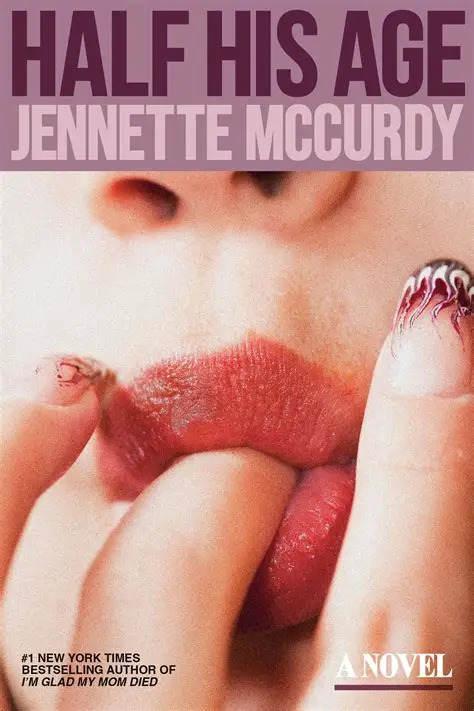
Waldo is ravenous. Horny. Blunt. Naive. Wise. Impulsive. Lonely. Angry. Forceful. Hurting. Perceptive. Endlessly wanting. And the thing she wants most of all: Mr. Korgy, her creative writing teacher with the wife and the kid and the mortgage and the bills, with the dead dreams and the atrophied looks and the growing paunch. She doesn’t know why she wants him. Is it his passion? His life experience? The fact that he knows books and films and things that she doesn’t? Or is it purer than that, rooted in their unlikely connection, their kindred spirits, the similar filter with which they each take in the world around them? Or, perhaps, it’s just enough that he sees her when no one else does.
Startlingly perceptive, mordantly funny, and keenly poignant, Half His Age is a rich character study of a yearning seventeen-year-old who disregards all obstacles — or attempts to overcome them — in her effort to be seen, to be desired, to be loved.
⭐⭐⭐
Rating: 3 out of 5.
REVIEW
THEMES: DARK, CONTEMPORARY, SEXUAL, FAST-PACED.
Mr. Korgy is all Waldo wants. She doesn’t know why but he has unknowingly drawn her in, and she will do anything to have him. The issue is that he is her creative writing teacher, he is married and she is half his age.
This was not received well.
Half His Age was one of the most anticipated releases of 2026, after Jennette McCurdy’s success with, I’m Glad My Mom Died. Now, it has an average rating of 3.4/5. Was it actually that bad?
No, in my opinion it is not nearly as bad as the reviews claim. The word ‘vulgar’ reoccurs in many reviews. I feel the right word is ‘disgusting’. There was some confronting content and at times I felt squeamish and grossed out.
I think this book fell into the wrong crowd. Her memoir is widely enjoyed so it attracted a general audience, but Half His Age is an acquired taste. As someone who has read many weird books, this is in keeping with the themes explored in ‘weird lit’.
Personally, I do not think this book romanticizes the inappropriate relationship at all, if anything it paints it in a very bleak light. Unless there is something I am missing?
I did find the main character, Waldo, slightly implausible. She was too self-aware; her behaviour was always explained or analysed. I do not think it is unreasonable for a 17–18-year-old to be perceptive, but no one is that aware of themselves, unless retrospectively.
Part of me wonders, if this book was partially autobiographical. I am not saying entirely, but the writing is so vivid and intimate.
Overall, I would not say I love the book, but I don’t hate it like I thought I would (considering the reviews). If you have read books like; The Vegetarian or Boy Parts, I would give it a try.
Click link below for Storygraph overview, which includes general rating, summary (same as above) and other reviews.
‘My name is Natalie Heller Mills, and I was perfect at being alive…’
Natalie lives a traditional lifestyle – and her followers are sick with envy. Her charming farmhouse on her working ranch is artfully cluttered, her husband is a handsome cowboy, her homemade sourdough boules are each more beautiful than the last. So what if there are nannies and producers and industrial-grade ovens behind the scenes? What her followers don’t know won’t hurt them.
Then, one morning, Natalie wakes up in a strange, horrible version of reality. Her home, her husband, her children—they’re all familiar, but something’s off. Is this a hoax? A reality show? A test from God? Natalie knows just two things for sure: this isn’t her perfect life, and she must escape, by any means possible.
Natalie Heller Mills has a perfect life… to her Instagram followers. She lives on a farm and leads a ‘traditional’ life. As a woman of faith, she serves her husband and children and never complains.
So why has she woken up in this nightmare. Her family is familiar, but something is off and her expensive, perfect house is now shabby and tired. Is this a test from God, or a practical joke? And most importantly, can she escape?
This book has blown up.
Maybe I am out of the loop, but for me, this book came out of the woodwork and took over my feed. Many people claim they read it in one sitting, which is one of the most enticing sentences a book lover can hear.
I did not read it in one sitting, and never would. Kudos to those who could, but you are insane. Natalie was too intense for me to take in all at once.
She is a very interesting character, and it was fascinating reading from a completely foreign perspective. Burke does a good job at making the reader feel like Natalie. I would catch myself reacting as if I was going through it, which is great but a little embarrassing when in public.
I’ve noticed a couple reviews saying that they didn’t like the book because they hated Natalie… but isn’t that the whole point? Wasn’t that the authors objective? A story doesn’t always have to be adored but understood. And if you understand it, you may come to love it.
After I finished the book, I kept looking up the characters, forgetting they are fictional. I still get the urge to whenever I think about the book, but alas the search is fruitless.
I was not a huge fan of the ending, it felt a little unoriginal but at the same it was realistic. I think some of the middle could have been cut out and the ending lengthened, as it felt a bit rushed.
An enjoyable read but I think it is slightly overhyped. I would suggest spacing it out if you’re someone whose mood mirrors the tone of the book you’re reading.
Click link below for Storygraph overview, which includes general rating, summary (same as above) and other reviews.
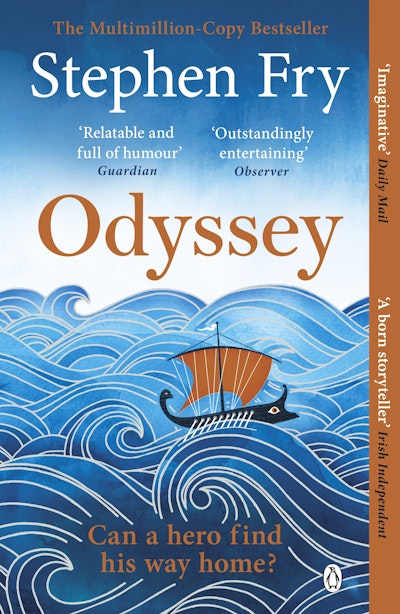
Odysseus’s journey from the battlefields of Troy to his home in Ithaca is one of the greatest stories ever told. From the lotus-eaters to the sirens, from Circe to the Cyclops, this is a tale of thrilling adventures, cunning escapes, and enduring devotion. Stephen Fry breathes new life into the ancient poem with humor and pathos. Illustrated throughout with classical art inspired by the myths, this gorgeous volume invites you to explore a captivating world with a brilliant storyteller as your guide.
Odyssey is the final instalment of the 4-book, Greek Myth series by Stephen Fry. It details Odysseus long journey to Ithica, as well as stories of other relative characters.
I may have made a mistake.
Stupidly, I read Circe by Madeline Miller just before reading Odyssey (the Goddess Circe, is also in Odyssey, to clarify). I may have to do some further reading into the Odyssey, as everything is getting mixed up with Miller’s incredible writing.
The Odyssey is an interesting story, and one I was looking forward to after reading Troy. I was especially excited about what happened to some of the beloved characters from Troy, as well as getting to know Odysseus better.
In some ways, it was good that I read Circe, as it changed the way I view Odysseus. It makes you realise how important the narrator is to a story. I wonder how Fry feels about Odysseus, and how that changed the narrative of the story, even without him knowing?
There is not much I can review without spoiling, so all I can say is it is well written, humorous and incredibly interesting.
All and all a very enjoyable read, I flew through it like the rest of the series. I will definitely be re-reading this series for years to come!
Click link below for Storygraph overview, which includes general rating, summary (same as above) and other reviews.
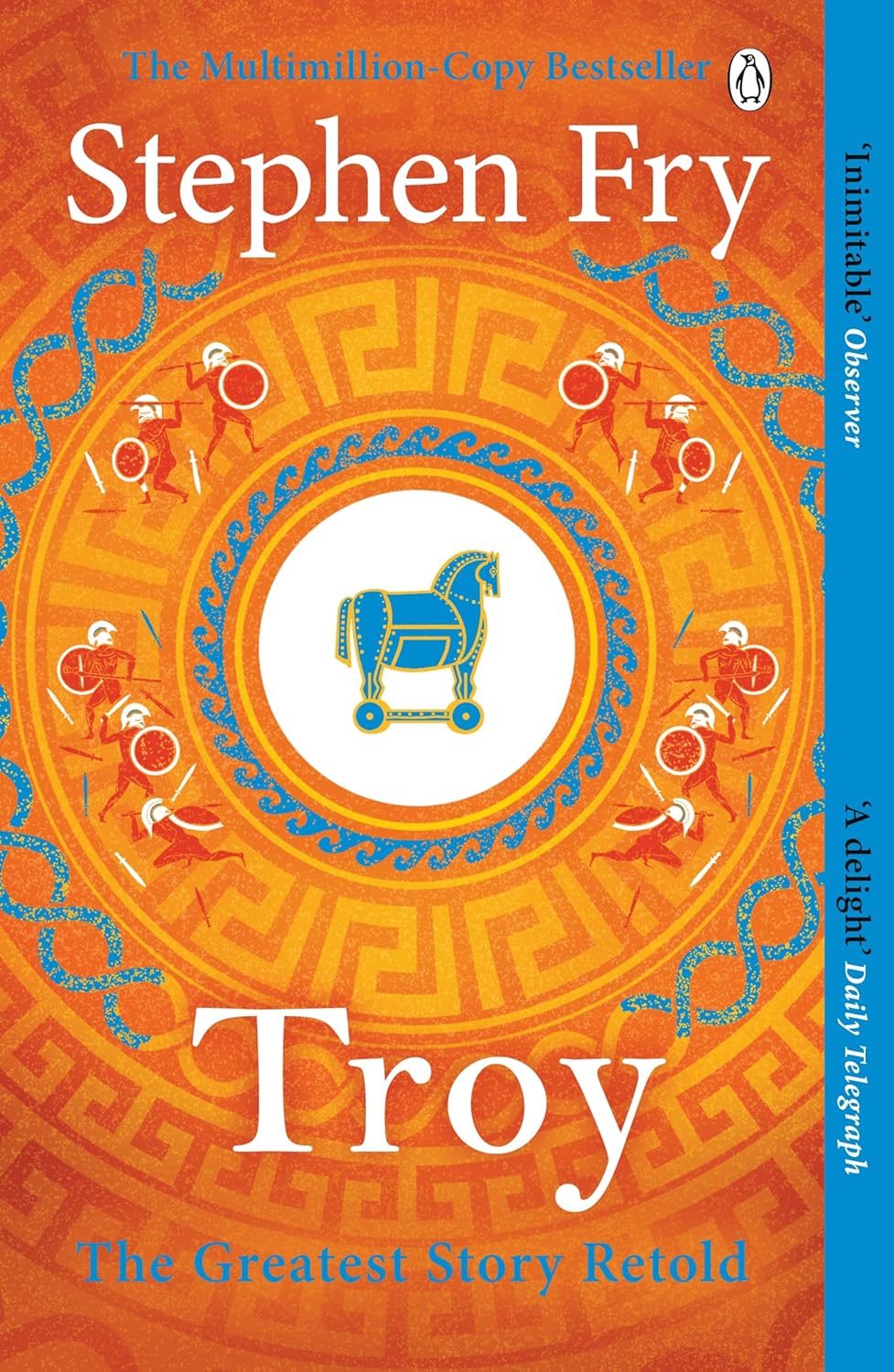
The story of Troy speaks to all of us – the kidnapping of Helen, a queen celebrated for her beauty, sees the Greeks launch a thousand ships against that great city, to which they will lay siege for ten whole and very bloody years.
It is Zeus, the king of the gods, who triggers war when he asks the Trojan prince Paris to judge the fairest goddess of them all. Aphrodite bribes Paris with the heart of Helen, wife of King Menelaus of the Greeks, and naturally, nature takes its course.
It is a terrible, brutal war with casualties on all sides. The Greeks cannot defeat the Trojans – since Achilles, the Greek’s boldest warrior, is consumed with jealousy over an ally’s choice of lover, the Trojan slave Briseis, and will not fight . . .
The stage is set for the oldest and greatest story ever told, where monstrous passions meet the highest ideals and the lowest cunning.
In Troy you will find heroism and hatred, love and loss, revenge and regret, desire and despair. It is these human passions, written bloodily in the sands of a distant shore, that still speak to us today.
Troy is book 3 of Stephen Fry’s 4-book instalment on the Greek Myths. It focuses on the 10-year Trojan war, as well as the events leading up to it.
I love this book!
I had some prior knowledge of the Trojan War, partly due to The Song of Achilles and partly due to references in films and books. Though, I now realise I knew so little.
I find the Trojan war very interesting, especially because it is really the beginning of the end for the Olympians. {Mild spoiler incoming} In my Heroes review I mention that I struggled to get over how involved the Gods were in the Heroes accomplishments. This book has an element of that; however, it is nullified by the fact that it is God vs God. By that, I mean that the Gods back both sides, so they cancel each other out, making it a fair(er) fight.
Like the previous books, it is impressive how much information Fry is able to squeeze in 400 pages. It is interesting all the way through, and I was not bored for a second.
I would definitely recommend this book to anyone looking to get into Greek Mythology or learn about the Trojan War. Just remember, it is an overview, and (obviously) mainly references the Iliad.
Click link below for Storygraph overview, which includes general rating, summary (same as above) and other reviews.
There are Heroes – and then there are Greek Heroes.
Few mere mortals have ever embarked on such bold and heart-stirring adventures, overcome myriad monstrous perils, or outwitted scheming vengeful gods, quite as stylishly and triumphantly as Greek heroes.
In this companion to his bestselling Mythos, Stephen Fry brilliantly retells these dramatic, funny, tragic and timeless tales. Join Jason aboard the Argo as he quests for the Golden Fleece. See Atalanta – who was raised by bears – outrun any man before being tricked with golden apples. Witness wily Oedipus solve the riddle of the Sphinx and discover how Bellerophon captures the winged horse Pegasus to help him slay the monster Chimera.
Filled with white-knuckle chases and battles, impossible puzzles and riddles, acts of base cowardice and real bravery, not to mention murders and selfless sacrifices, Heroes is the story of what we mortals are truly capable of – at our worst and our very best.
Heroes is book 2 of Stephen Fry’s 4 book instalment of the Greek Myth retellings. Heroes, unsurprisingly, focuses on the heroes of Greek Mythology; Jason, Theseus, Oedipus, Bellerophon etc.
This is my least favourite of the 4.
Now, that is not because I did not find it interesting. Every story is interesting, and I like them all individually. However, [stop reading if you do not want anything remotely spoiled] I can’t get past that everything that happened to these supposed ‘heroes’, only happened because the Gods willed it. I know all these stories are fictional in the first place, but it was like children playing with their dolls.
Apart from that, I again, was surprised by how often these stories are referenced in contemporary media and literature. I also feel a whole lot smarter, because now, I actually understand them.
Fry’s writing was clear, interesting and easy to read. I am amazed by his ability to translate so much information into a 400-page book. His comedic take on conversations made the stories all the more enjoyable.
Like Mythos, I would recommend to beginners, but it could be too broad for someone more knowledgeable on the area.
Click link below for Storygraph overview, which includes general rating, summary (same as above) and other reviews.
The Greek myths are the greatest stories ever told, passed down through millennia and inspiring writers and artists as varied as Shakespeare, Michelangelo, James Joyce and Walt Disney.
They are embedded deeply in the traditions, tales and cultural DNA of the West. In Stephen Fry’s hands the stories of the titans and gods become a brilliantly entertaining account of ribaldry and revelry, warfare and worship, debauchery, love affairs and life lessons, slayings and suicides, triumphs and tragedies.
You’ll fall in love with Zeus, marvel at the birth of Athena, wince at Cronus and Gaia’s revenge on Ouranos, weep with King Midas and hunt with the beautiful and ferocious Artemis.
Mythos is the first instalment of four books which retell the Greek myths. Mythos centres around the creation of the Olympians and onwards. Though, this book specifically focuses on the God’s and Goddesses, not mortals.
This was such an enjoyable read, or listen should I say, since I audio booked it. What I love about the audiobook is that Stephen Fry himself narrates it. To me, that shows that extra bit of effort that I respect.
Since Fry is a comedian, amongst other things, the stories were told in a humorous fashion. I found every little story interesting and was amazed at how much Greek Mythology has seeped into the modern world. I have always been fascinated by Greek Mythology (it was certainly expedited by The Song of Achilles) but never understood the niches – which now I do – on a basic level, of course.
I can’t image how long this would have taken, and how arduous the process would have been. Having to sift through references, narrow down vital information and then organise and communicate it in a palatable manner. I really commend Fry, because it flows seamlessly.
This is not a problem for me, as I am a beginner, but if you’re knowledgeable in the area, this would not be for you. Understandably, a lot of the stories are summarised and only the key events are highlighted. In other words, this is an overview.
Overall, I have taken a lot from this book and find it wildly interesting. It is probably my favourite of the series.
Click link below for Storygraph overview, which includes general rating, summary (same as above) and other reviews.
“What is it you think you’re protecting in that brain of yours? The war is over. Holdfast is dead. The Eternal Flame extinguished. There’s no one left for you to save.”
Once a promising alchemist, Helena Marino is now a prisoner—of war and of her own mind. Her Resistance friends and allies have been brutally murdered, her abilities suppressed, and the world she knew destroyed.
In the aftermath of a long war, Paladia’s new ruling class of corrupt guild families and depraved necromancers, whose vile undead creatures helped bring about their victory, holds Helena captive.
According to Resistance records, she was a healer of little importance within their ranks. But Helena has inexplicable memory loss of the months leading up to her capture, making her enemies wonder: Is she truly as insignificant as she appears, or are her lost memories hiding some vital piece of the Resistance’s final gambit?
To uncover the memories buried deep within her mind, Helena is sent to the High Reeve, one of the most powerful and ruthless necromancers in this new world. Trapped on his crumbling estate, Helena’s fight—to protect her lost history and to preserve the last remaining shreds of her former self—is just beginning. For her prison and captor have secrets of their own . . . secrets Helena must unearth, whatever the cost.
⭐⭐
Rating: 2 out of 5.
REVIEW
THEMES: FANTASY, EMOTIONAL, TENSE, DARK ACADEMIA, SLOW-PACED.
Helena Marino is a prisoner being held by the enemy she once fought against. She is imprisoned in the residence of the High Reeve who is notorious for his murderous rampages. Even though her records show she is nothing more than a healer, she possesses something they want. The issue is, it is hidden within her mind and neither they nor Helena can access it. Helena must dig deep to reveal what is being hidden within her, though that raises the question… is it hidden for a reason? And will uncovering it save or doom her?
TW: Sexual assault, gore, torture, intense violence and much more.
Does this book need to be this long?
No. It really and truly does not. This could have been 500 pages.
The plot of the story is strong; the settings are described in detail, and I could clearly picture every place described. There is no misconception that SenLinYu is a talented writer. There were multiple points where I was looking forward to coming back to the story.
Whilst I did enjoy aspects of the book, the characters fell entirely flat. Helena is a martyr and I cannot understand why she did the things she did. The characters SenLinYu were trying to push as ‘good’ never actually did anything to prove this narrative. There is also an inappropriate dynamic and I am displeased with how it unfolds.
I will go into more detail on my spoiler review; I have very strong feelings so brace for a rant.
In saying all this, I am not a big fan of ‘dark academia/fantasy’, so that definitely contributes to my rating.
From a fantasy reader (or just a reader), I would give this one a miss.
Click link below for Storygraph overview, which includes general rating, summary (same as above) and other reviews.
“What is it you think you’re protecting in that brain of yours? The war is over. Holdfast is dead. The Eternal Flame extinguished. There’s no one left for you to save.”
Once a promising alchemist, Helena Marino is now a prisoner—of war and of her own mind. Her Resistance friends and allies have been brutally murdered, her abilities suppressed, and the world she knew destroyed.
In the aftermath of a long war, Paladia’s new ruling class of corrupt guild families and depraved necromancers, whose vile undead creatures helped bring about their victory, holds Helena captive.
According to Resistance records, she was a healer of little importance within their ranks. But Helena has inexplicable memory loss of the months leading up to her capture, making her enemies wonder: Is she truly as insignificant as she appears, or are her lost memories hiding some vital piece of the Resistance’s final gambit?
To uncover the memories buried deep within her mind, Helena is sent to the High Reeve, one of the most powerful and ruthless necromancers in this new world. Trapped on his crumbling estate, Helena’s fight—to protect her lost history and to preserve the last remaining shreds of her former self—is just beginning. For her prison and captor have secrets of their own . . . secrets Helena must unearth, whatever the cost.
⭐⭐
Rating: 2 out of 5.
REVIEW
THEMES: FANTASY, EMOTIONAL, TENSE, DARK ACADEMIA, SLOW-PACED.
Helena Marino is a prisoner being held by the enemy she once fought against. She is imprisoned in the residence of the High Reeve who is notorious for his murderous rampages. Even though her records show she is nothing more than a healer, she possesses something they want. The issue is, it is hidden within her mind and neither they nor Helena can access it. Helena must dig deep to reveal what is being hidden within her, though that raises the question… is it hidden for a reason? And will uncovering it save or doom her?
TW: Sexual assault, gore, torture, intense violence and much more.
Does this book need to be this long?
No. It really and truly does not. This could have been 500 pages.
The plot of the story is strong; the settings are described in detail, and I could clearly picture every place described. There is no misconception that SenLinYu is a talented writer. There were multiple points where I was looking forward to coming back to the story.
Whilst I did enjoy aspects of the book, the characters fell entirely flat.
Rant incoming.
I remember once I saw someone say that women often have to prove their greatness, whereas men do not. Helena and Luke are perfect examples. Luke is described as this incredible and selfless person, yet I never really see it. Helena sacrifices herself to the point of becoming a martyr, just for a measly pat on the back. Luke is simply decent – which is rather easy when you are from a privileged family!
You are kind of beaten over the head with how selfless Helena is. It gets to a point where she is just naive. I could never relate to someone who will ruin themselves for people who could care less, so maybe that is why I dislike her.
There are other bland and unrelatable characters throughout the book, but these are things I can get past.
What I can’t get past is normalising abuse. Just because this book is set in a time of war, where everything is dark and dreadful does not mean you can minimise what Kaine does to Helena. Kaine literally beats Helena senseless, violates her and humiliates her for about 500 pages. These instances are ‘mitigated’ by the fact that Helena is persevering because she is secretly trying to gain his trust. Although, conveniently when the time comes to use this secret ammunition, she has grown too fond of him. Shocker. All of this is simply because he cried about his dead mum and got hurt by his own alliance. Apparently, this wipes away all his horrendous abuse. The kicker is that he justifies it by saying he was doing it all to deter her… as if it was for her own good. After this point, he is romanticized – or their relationship is.
This continues to spread the message; ‘Ladies, if he is horrible to you just try a little harder because at some point, he may reward you with affection!’ And its harmful.
What gets me the most, is in the end, he is made out to be this misunderstood and valiant person. He literally murdered hundreds of innocent people to find a woman who he treats as more of a possession than anything else. I felt violated reading as Helena slowly and reluctantly gave into his advances.
I also just found out that this is a Hermione-Draco fanfiction come to life. I am officially turned off.
Sidenote: Crowther reminded me of Little Finger from GOT.
I will end this rant, even though I have more to say, but I don’t want to come off as a complete buzzkill.
In saying all this, I am not a big fan of ‘dark academia/fantasy’, so that definitely contributes to my rating.
From a fantasy reader (or just a reader), I would give this one a miss.
Click link below for Storygraph overview, which includes general rating, summary (same as above) and other reviews.
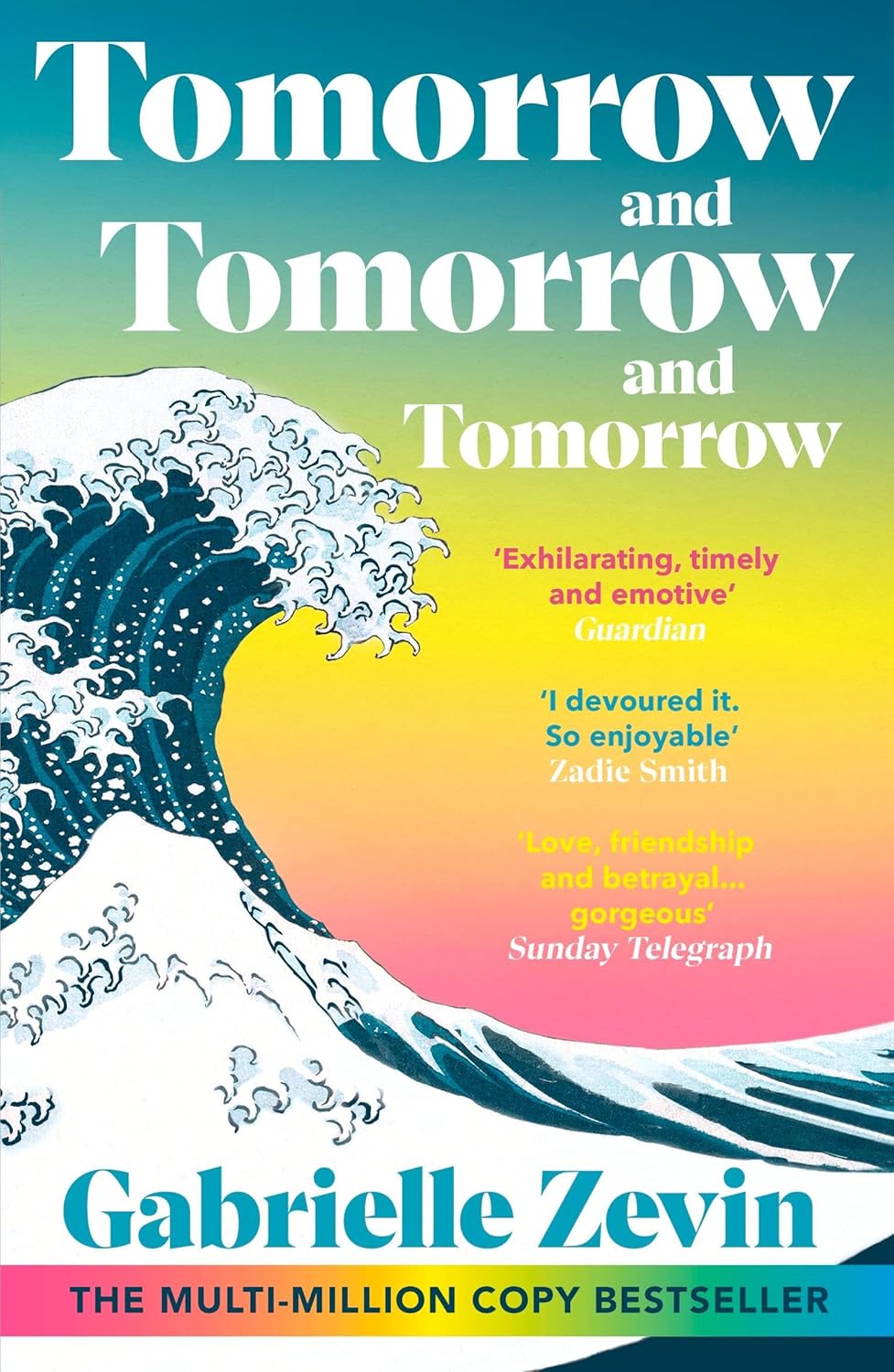
On a bitter-cold day, in the December of his junior year at Harvard, Sam Masur exits a subway car and sees, amid the hordes of people waiting on the platform, Sadie Green. He calls her name. For a moment, she pretends she hasn’t heard him, but then, she turns, and a game begins: a legendary collaboration that will launch them to stardom. They borrow money, beg favors, and, before even graduating college, they have created their first blockbuster, Ichigo: a game where players can escape the confines of a body and the betrayals of a heart, and where death means nothing more than a chance to restart and play again. This is the story of the perfect worlds Sam and Sadie build, the imperfect world they live in, and of everything that comes after success: Money. Fame. Duplicity. Tragedy.
Spanning thirty years, from Cambridge, Massachusetts, to Venice Beach, California, and lands in between and far beyond, Gabrielle Zevin’s Tomorrow, and Tomorrow, and Tomorrow is a dazzling and intricately imagined novel that examines the multifarious nature of identity, games as artform, technology and the human experience, disability, failure, the redemptive possibilities in play, and above all, our need to connect: to be loved and to love. Yes, it is a love story, but it is not one you have read before.
Sadie Green and Sam Masur love each other. They have a strong connection, which stems from their shared love of video games. They have been friends since childhood, after meeting at a hospital, under unfortunate circumstances. Despite their friendship resulting in a lifechanging venture, they must also brave heartbreak and betrayal. The question is, can they?
That was not what I was expecting.
The portrayal of friendship, especially Sadie and Sam’s, reminds me of Demon Copperhead. What I mean, is that it is so raw and real and doesn’t shy away from ugliness. Among many other things, I think the mark of a good book is when you hate the characters… some of the time. Obviously, I need balance, otherwise, If I detest a character I get into the habit of mumbling angrily and it’s not a good look.
I am impressed with how much story Gabrielle Zevin is able to fit into 400 pages. I have recently read a 1000-page book, and the characters don’t have half the depth of these ones (don’t even get me started). I am actually surprised that it is 400 pages, because it felt like so much more.
A fair warning, there are intense themes in this book, including; suicide, gore, sexual assault and, honestly, a consistent bleakness. That’s not to say there is no happiness in the book, but from my perspective, Zevin aims to perpetuate authentic relationships and events. So, it is not sugar coated or glossed over.
My only issue with the book is Sadie’s character. I feel there was a lot of lost potential, and her character solely revolves around her experiences with men. I have gone into more detail in my spoiler review.
If you like realistic books, like Demon Copperhead, I would give this one a go.
Click link below for Storygraph overview, which includes general rating, summary (same as above) and other reviews.